In high-temperature industrial applications, selecting the appropriate refractory material is crucial for operational efficiency, safety, and cost-effectiveness.
Understanding the difference between fire bricks and insulation bricks is essential for industries such as steel, cement, glass, and petrochemicals, where thermal management plays a pivotal role.
Understanding Fire Bricks
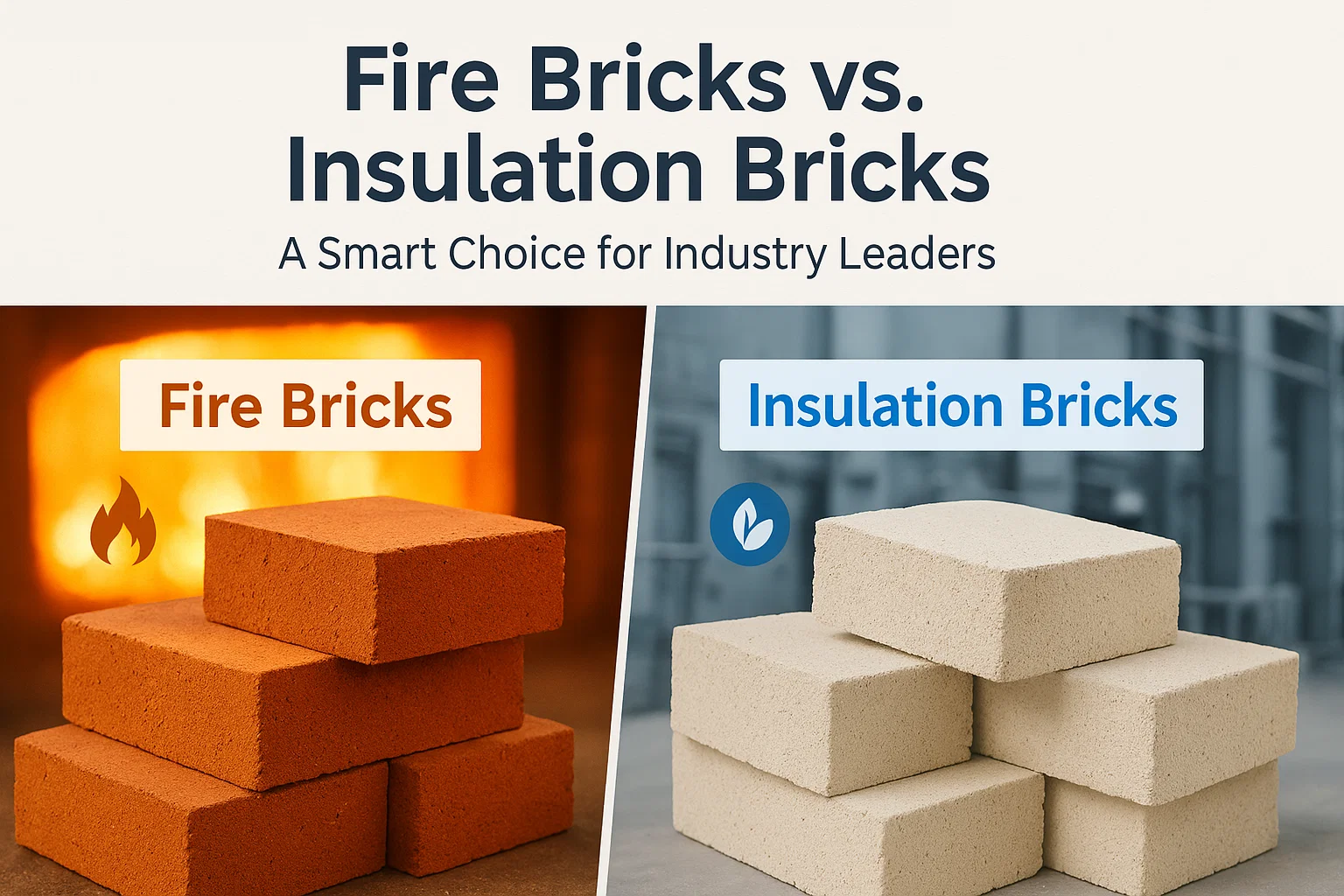
Fire bricks, also known as refractory bricks, are specially made to endure intense heat and tough working environments. They are dense, robust, and possess high thermal conductivity, making them ideal for environments with direct flame exposure and mechanical stress.
Key Characteristics:
- High Refractoriness: Suitable for temperatures above 1400°C.
- Density: Typically over 2.0 g/cm³, providing structural strength.
- Heat Flow Efficiency: These bricks usually have high thermal conductivity (above 1.0 W/m·K), which helps them absorb and transfer heat effectively.
- Durability: Resistant to thermal shock, abrasion, and chemical attacks.
Common Applications:
- Lining of furnaces, kilns, and fireplaces.
- Best suited for zones that face direct flames or frequent physical stress.
Exploring Insulation Bricks
Insulation bricks, also known as insulating fire bricks, are designed primarily for thermal insulation rather than structural support. They are lightweight, porous, and have low thermal conductivity, making them excellent for minimizing heat loss.
Key Characteristics:
- Lower Refractoriness: Suitable for temperatures up to 1400°C.
- Density typically falls between 0.8 and 1.0 g/cm³, which keeps the bricks relatively light.
- Thermal Conductivity: Low thermal conductivity (0.2–0.4 W/m·K), providing excellent insulation.
- Ease of Handling: Easy to cut and install due to their lightweight nature.
Common Applications:
- Insulation layers in kilns and furnaces.
- Areas where heat retention and energy efficiency are priorities.
Comparative Analysis: Insulation Bricks vs. Fire Bricks
To better understand the difference between fire bricks and insulation bricks, let’s compare their properties:
| Property | Fire Bricks | Insulation Bricks |
| Refractoriness | Above 1400°C | Up to 1400°C |
| Density | >2.0 g/cm³ | 0.8–1.0 g/cm³ |
| Thermal Conductivity | >1.0 W/m·K | 0.2–0.4 W/m·K |
| Mechanical Strength | High | Moderate |
| Primary Function | Withstand direct flame and structural support | Thermal insulation and energy efficiency |
| Application Areas | Fireplaces, kilns, furnaces | Insulation layers in thermal equipment |
Strategic Considerations for Industrial Applications
Energy Efficiency and Cost Savings:
In industries where energy consumption is a significant operational cost, insulation bricks play a vital role. Their low thermal conductivity reduces heat loss, leading to energy savings and improved process efficiency.
Structural Integrity and Safety:
For applications involving direct exposure to flames or high mechanical stress, fire bricks are indispensable. Their high density and thermal resistance ensure structural integrity and safety under extreme conditions.
Combined Use for Optimal Performance:
In many industrial setups, a combination of both brick types is employed. Fire bricks are used in areas with direct flame contact, while insulation bricks are placed behind them to minimize heat loss, achieving both durability and energy efficiency.
What Fire Bricks Are Made Out Of?
Curious about what fire bricks are made out of? They’re built using tough materials like fireclay and silica, which help them hold up against intense heat in places like furnaces and wood-fired ovens.
Fire bricks are typically made from fireclay, a type of clay that can withstand high temperatures. To gain the right balance of strength and heat resistance, the clay is baked at very high temperatures during production.
Some refractory fire bricks may also include additives like alumina or silica to enhance specific characteristics.
Market Insights and Industry Trends
Growing Demand in Industrial Sectors:
The global fire brick market was valued at USD 32.5 billion in 2023 and is projected to reach USD 48.6 billion by 2030, growing at a CAGR of 5.2% during the forecast period. This growth is driven by increased demand in industries such as steel, cement, and glass manufacturing.
Emphasis on Energy Efficiency:
The insulating fire bricks market is also experiencing significant growth, with a market size valued at USD 1.4 billion in 2023 and expected to reach USD 2.8 billion by 2030, growing at a CAGR of 9.7%. The emphasis on energy efficiency and sustainability in industrial processes is a key driver for this market.
Innovation and Technological Advancements:
Advancements in material science have led to the development of electrified fire bricks capable of storing and discharging heat at extremely high temperatures. These innovations contribute to reducing reliance on fossil fuels and enhancing the sustainability of industrial operations.
Conclusion
Understanding the difference between fire bricks and insulation bricks is crucial for industries aiming to optimize performance, ensure safety, and achieve energy efficiency. By selecting the appropriate brick type based on specific application requirements, businesses can enhance operational efficiency and contribute to sustainable industrial practices.
For high-quality refractory solutions, consider exploring products from Ganeshas, a trusted name in the industry known for its commitment to excellence and innovation.