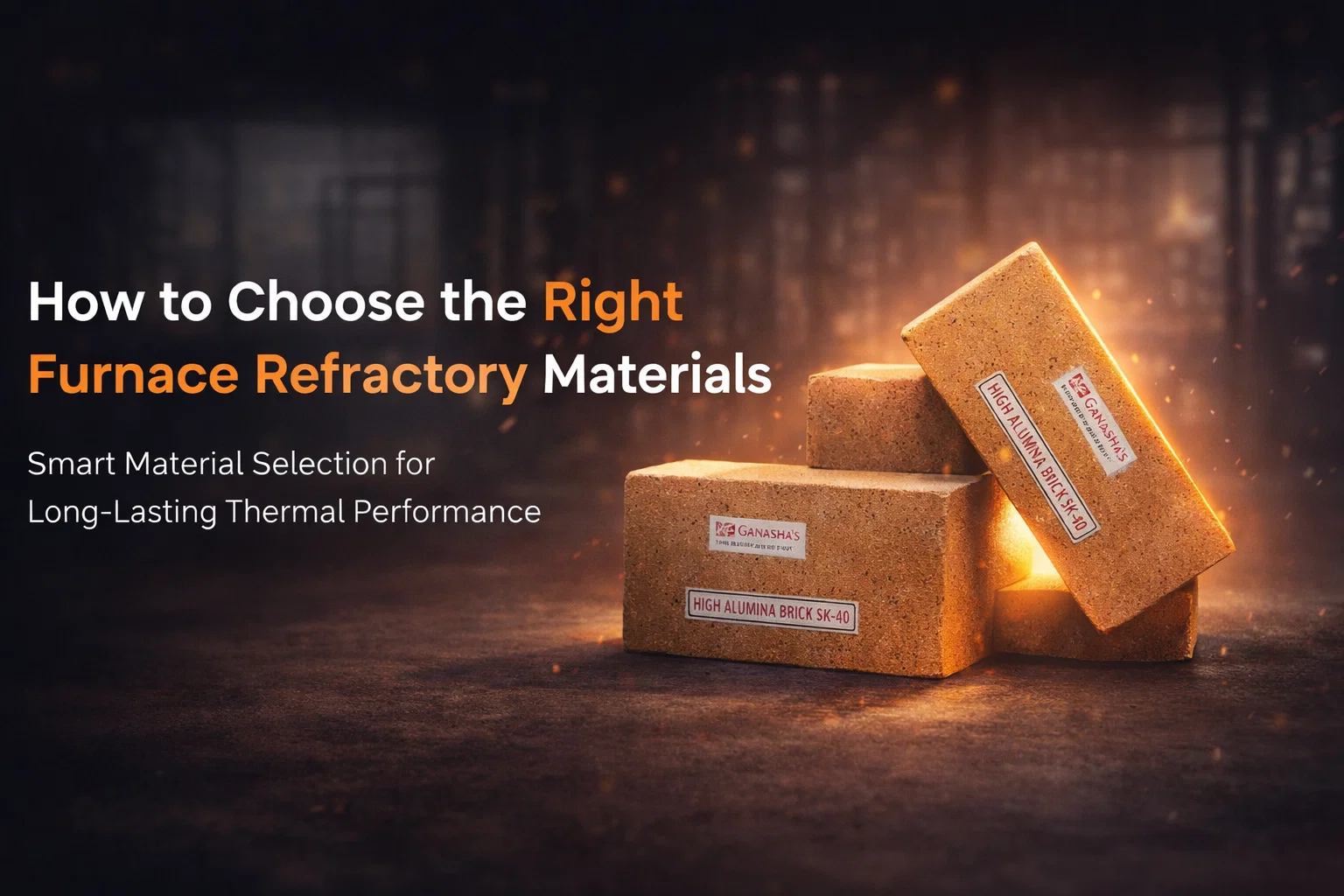
Selecting the right furnace refractory materials is one of the most critical decisions in industrial operations. Whether you’re dealing with steel furnaces, cement kilns, or industrial kilns, the choice of refractory directly impacts furnace efficiency, lifespan, and maintenance expenses.
Poor selection can lead to frequent breakdowns, energy loss, and costly downtime, while the right materials can significantly improve performance and durability.
This guide explains the key principles for selecting refractory materials and how engineers can make informed decisions for optimal furnace performance.
Key Insights
- Furnace Refractory Materials are essential for protecting furnaces from extreme heat, chemical attack, and wear.
- Choosing the right material improves efficiency, lifespan, and reduces downtime.
- Key factors include temperature resistance, thermal conductivity, mechanical strength, and chemical compatibility.
- Use thermal shock-resistant refractory for fluctuating temperatures and slag-resistant materials for harsh environments.
- Select between refractory bricks, castable refractory materials, and insulation materials based on furnace design.
- Proper furnace refractory installation and maintenance are critical for long-term performance.
- Industry-specific needs (steel, cement, kilns) require tailored material selection.
What Are Furnace Refractory Materials?
Furnace refractory materials are heat-resistant materials used to line high-temperature equipment such as furnaces, kilns, and reactors. These materials are designed to withstand extreme temperatures, chemical attack, and mechanical wear.
Common types include refractory bricks for lining furnaces, castable refractory materials, and insulation materials, with each type having a specific purpose based on the furnace’s design and how it operates.
Why Does Refractory Selection Matter?
The right refractory lining design for furnaces ensures:
- Longer furnace life
- Reduced heat loss
- Improved energy efficiency
- Lower maintenance costs
- Better resistance to chemical and mechanical damage
For industries like steel and cement, using the right refractory materials for steel furnaces or cement kiln applications is essential to maintaining productivity and safety.
Key Principles for Choosing Furnace Refractory Materials
Here are some of the key principles for choosing furnace refractory materials:
1. Understand the Operating Temperature
One of the first factors to consider is the refractory service temperature. Different furnaces operate at varying temperature ranges, and selecting high-temperature refractory materials that can withstand these conditions is crucial.
Materials should maintain structural integrity even at peak temperatures without deformation. Properties like refractoriness under load help determine how well a material performs under both heat and pressure.
2. Evaluate Thermal Properties
Thermal performance plays a major role in refractory selection. Important factors include
- Thermal conductivity of refractory materials: Lower conductivity improves insulation and energy efficiency
- Resistance to rapid temperature changes (thermal cycling)
- Ability to minimize heat loss
For applications with frequent heating and cooling cycles, thermal shock-resistant refractory materials are essential to prevent cracking and failure.
3. Assess Mechanical Strength and Wear Resistance
Furnaces experience constant abrasion from materials, gases, and movement. This makes refractory wear resistance a key selection criterion.
Materials should have high mechanical strength to withstand:
- Abrasive particles
- Heavy loads
- Structural stress
For example, high-density refractory fire brick options are commonly used in areas exposed to mechanical impact.
4. Consider Chemical Compatibility
The chemical environment inside a furnace varies depending on the application. Exposure to slag, gases, and molten materials can degrade refractory linings.
Factors to evaluate include:
- Refractory corrosion resistance
- Slag resistance refractory properties
- Compatibility with furnace atmosphere
For instance, refractory material in glass melting furnaces requires high resistance to corrosive molten glass and chemical reactions.
5. Analyze Physical Properties
The physical characteristics of refractory materials also influence performance:
- Refractory porosity: Impacts insulation and strength
- Refractory density: Higher density often means better strength but lower insulation
- Structural stability under load
Balancing these properties is essential to achieve both durability and energy efficiency.
6. Choose the Right Type of Refractory
Different furnace zones require different materials. Selection should be based on application:
- Refractory bricks for furnace lining: Ideal for structural strength
- Castable refractory materials: Suitable for complex shapes and repairs
- Refractory insulation materials: Used to reduce heat loss
Understanding how to select refractory lining for furnace applications ensures each zone performs optimally.
7. Focus on Installation and Maintenance
Even the best materials can fail if not installed properly. Proper furnace refractory installation ensures:
- Correct alignment and bonding
- Reduced thermal stress
- Longer service life
Additionally, regular refractory lining maintenance helps detect early signs of wear, preventing major failures and downtime.
Application-Based Refractory Selection
Different industries have unique requirements:
- Steel Industry: Requires high-strength, high-temperature materials with excellent slag resistance
- Cement Industry: Needs materials resistant to abrasion and chemical attack
- Industrial Kilns: Focus on insulation and thermal efficiency
A well-defined refractory material selection guide for engineers should always consider the specific furnace environment and process conditions.
How Proper Selection Improves Furnace Life?
Choosing the right refractory materials directly impacts furnace longevity. Achieving the correct balance of thermal, mechanical, and chemical properties has the following benefits:
- Reduce downtime
- Improve operational efficiency
- Lower repair costs
- Enhance safety
Brands like Ganeshas Refractory focus on delivering engineered solutions tailored to industrial needs, ensuring optimal performance across different applications.
Conclusion
It’s not just a technical matter to choose the right Furnace Refractory Materials. It’s also a matter of strategy. Industries can make furnaces work better and last longer by looking at things like temperature conditions, thermal properties, chemical resistance, and how they are installed.
If you’re wondering how to choose refractory materials for industrial furnaces, the answer lies in understanding your application, analyzing key material properties, and working with trusted providers like Ganeshas Refractory to ensure long-term reliability.
Frequently Asked Questions
1. What are refractory materials used in furnaces?
Refractory materials are heat-resistant materials used to line furnaces, kilns, and reactors. They protect the furnace structure from high temperatures, chemical attack, and mechanical wear.
2. What factors should be considered when choosing refractory materials?
Key factors include operating temperature, thermal conductivity, chemical resistance, mechanical strength, porosity, and furnace environment.
3. Why is refractory selection important for industrial furnaces?
Proper selection improves furnace efficiency, reduces energy loss, minimizes maintenance expenses, and extends equipment lifespan.
4. Which refractory materials are best for high-temperature furnaces?
High-alumina bricks, magnesia-based materials, and specialized high-temperature refractory materials are commonly used for extreme heat applications.
5. What is thermal shock resistance in refractory materials?
Thermal shock resistance refers to a material’s ability to withstand rapid temperature changes without cracking or failing, which is crucial in cyclic heating environments.