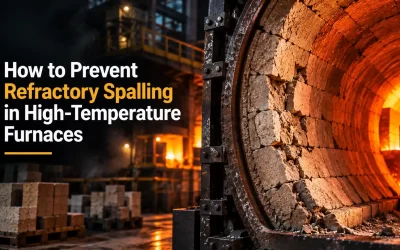

Refractory is designed to keep the molten aluminum container, but which material is the best? That is debatable.
There are several tests that can be helpful, and these are discussed below. Nevertheless, the result is biased and depends on a number of factors.
Corrosion-resistant materials are usually dense and have low porosity. Therefore, the thermal shock characteristics of this sort of material are usually poor.
Furthermore, several corrosion-testing additives have temperature restrictions, which may prohibit their usage at and above the metal line, where pressures are stronger.
This challenge is made harder by corundum development, mechanical damage, and fluxes.
What do you hope to achieve? What is the financial plan? What are some of the operational considerations? What exactly are the “problematic” regions? These are the additional things you should keep in mind!
Why is choosing important?
A furnace’s refractory liner is its beating heart. The furnace’s “effectiveness” is an essential factor in furnace construction.
The refractory lining must not only hold the molten aluminum, but it must also endure mechanical damage and ensure that thermal wall losses are kept to a minimum.
The hearth and lower sidewall, which have the most metal contact, are subjected to the most mechanical stress and metal penetration.
Because metal creeps into joints and fractures until it eventually makes its way underneath the upper grade of bricks or a hot face liner, metal penetration in the hearth can force the fireplace to rise up and away from the furnace floor.
Metal penetration in sidewalls usually happens along the metal line when molten aluminum and aluminum metal oxide combine with the refractory, causing a serious problem.
Apply the testing to get the right results
To mention a few, aluminum furnace phase, metal intake, pressures, alloys, fluxes, cleaning/maintenance processes, aluminum alloy, aluminum supply, burning, and combustion by-products all play a role in choosing “the best” material. All of these are crucial.
Even though the molten aluminum test may provide the initial answer, it may be necessary to do additional tests.
There are three commonly accepted molten aluminum test methods for evaluating refractories for use in aluminum furnaces however, keep in mind that these tests are primarily concerned with corrosion:
- The Cup Test
- Test Furnace Method
- Immersion test
So, what should you do?
The above procedures are effective for substances underneath the metal line, where rust is the primary issue; nevertheless, they may not be quite as effective for substances above the metallic line.
The circumstances in the furnace refractory above and below the metal line are more complicated and harder to manage. Thermal stimulation, as well as corundum development and operational considerations, must all be taken into account.
Finally, researchers are designing tests in this field, but most of these tests have yet to be verified. As a result, make the test more complicated and the results more difficult to replicate.
Currently, we believe that looking at many testing as well as field experience is the best way to locate materials that perform well in a variety of conditions.
Rather than testing for a single attribute, which might be costly and fail to satisfy your fundamental goals.
Please get in touch if you’re considering new furnace refractory material or if you have inquiries about what’s presently in your furnace. We’d be pleased to support you.
To conclude –
The lifespan and energy efficiency of a furnace refractory are determined by the refractory materials used and their behavior in the furnace environment. The amount of heat loss throughout steady-state conditions and reserve heat loss during transient conditions is determined by the characteristics and condition of the refractory.
Stopping the functioning of the aluminum furnace owing to refractory failure due to rust and mechanical wear has a significant influence on energy savings. The energy savings are increased by reducing downtime due to refractory failure, which can be accomplished by employing phosphate bonded refractory materials.