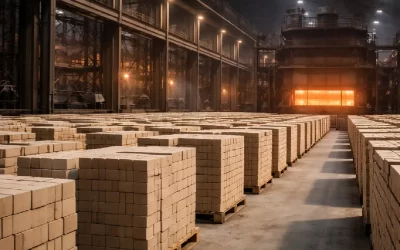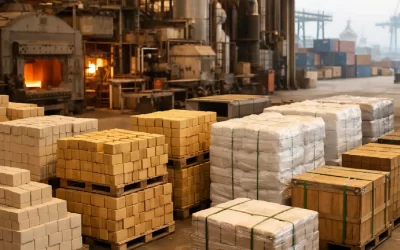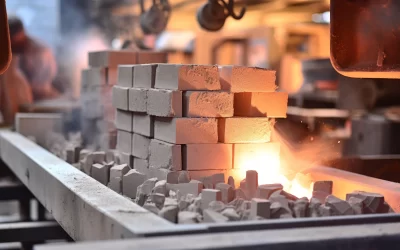

Magnesia bricks are a type of basic refractories that are made from dead-burned magnesite. These bricks are characterized by their good resistance to various types of wear and corrosion, making them suitable for use in a variety of high-temperature applications, such as the transition and burning zones of cement rotary kilns
However magnesia is extremely dangerous and it can cause harmful effects if not handled correctly. Keep reading this article to know how to produce magnesium bricks safely and efficiently. This article covers everything you need to know about Magnesia Bricks – manufacturing them, their uses, benefits, etc. So what are you waiting for? Read on to know more
Magnesia Bricks are Made of:
Magnesia Bricks are alkaline refractory materials. These products have over 90% magnesium oxide content and adopt periclase as the principal crystalline phase. Magnesia Brick is mainly used in basic open-hearth furnace for steelmaking, electric furnace, rotary cement kiln, heating furnace, glass furnace and hyperthermia tunnel kiln with properties of higher refractoriness, good basic slag erosion resistance and high apparent initial softening temperature.
Magnesia Brick Manufacturing Process:
The manufacturing process of magnesia brick includes the following steps:
1. Break and smash:
Crushing is the process of processing large pieces of material into ideal particle size materials.
2. Ingredients (weighing):
The raw materials are prepared in a predetermined proportion and mixed in a strong sand mixer. The order of feeding is magnesia aggregate – carbon fiber – binder – carbon raw material.
3. Mixing:
Mix thoroughly to get perfect coating. Add mixture made in step (B) and remix the batch intensively. Now add powder Resin (item 9), then Hexamine (item 10) and mix once again.
4. Molding:
Use a molding machine to make the mixture into bricks.
5. Drying:
Use a drying oven to dry the bricks for several hours.
6. Firing:
Fire the bricks in a kiln at temperatures of 1550 to 1600 degrees Celsius.
7.Finishing:
The final step is to grind and polish the bricks to get the desired shape and size.
Uses of Magnesia Bricks:
Magnesia bricks can be used in a variety of applications, depending on the type of brick being used. Common uses include furnaces, ladles, secondary refining vessels, and cement and glass making kilns.
Magnesia brick is used for permanent layers in steel making converters, AOD furnaces, and more. Magnesia brick is also used to line steel ladles and Basic Oxygen Furnaces (BOFs).
Additionally, magnesia bricks are used in steelmaking furnaces, electric furnace bottom and wall, and high temperature tunnel kiln. Magnesia bricks are also used as heat storage room lattice bricks in glass kilns.
Types of Bricks Used in Refractory Industry:
The types of bricks used in the refractory industry include:
1. Fire Clay Bricks:
These are the most commonly used refractory bricks and are made from clay and other minerals. They are used in high-temperature applications like furnaces and kilns.
2. High-Alumina Bricks:
These bricks are made from alumina, which is a highly-resistant material. They are used in applications such as glass kilns and aluminum smelters.
3. Magnesite Bricks:
These bricks are made from magnesia and are used in applications such as furnaces and ladles.
4. Dolomite Bricks:
These bricks are made from dolomite and are used in applications such as steel-making furnaces and cement kilns.
5. Silica Bricks:
These bricks are made from silica and are used in applications such as glass furnaces and ceramic kilns.
6. Bauxite Bricks:
These bricks are made from bauxite and are used in applications such as aluminum smelters and steel-making furnaces.
7. Chromium Bricks:
These bricks are made from chromium and are used in applications such as glass kilns and steel-making furnaces.
Properties of Magnesia Bricks:

Magnesia Bricks have the following properties:
– High melting point.
– High chemical inertness against both acidic and basic slags.
– Low expansion values at elevated temperatures.
– Good resistance to basic slags.
– Spalling resistance.
– Strong abrasion and corrosion resistance.
– High cold crushing strength.
-Very strong and extremely durable.
How to Find Best Magnesia Bricks?
To find the best magnesia bricks, you should consider several factors, such as the manufacturer’s reputation, the quality of the product, its physical and chemical properties, the cost and availability, and the compatibility with the application.
Additionally, you should make sure the bricks have a high melting point, low expansion values at elevated temperatures, strong abrasion and corrosion resistance, and a good resistance to basic slags. You should also check for any certifications or standards that the bricks meet to ensure their quality.
Moreover, Ganeshas is one the leading refractory manufacturers in India who’s committed to deliver quality-approved refractory materials & mechanical products. Get in touch with our team to get the best deal on refractory materials.