In industrial settings where extreme temperatures are a daily challenge, castable refractory materials play a crucial role in ensuring equipment durability and operational efficiency. This comprehensive guide explores what is castable refractory and benefits for high-temperature industrial processes.
Understanding What is Castable Refractory
Castable refractory refers to heat-resistant materials supplied as dry mixtures that, when combined with water, create a cement-like consistency capable of being poured or cast into place. Unlike pre-formed refractory bricks, castable refractories conform to any shape before hardening into a solid mass that withstands temperatures exceeding 1000°C (1832°F).
The composition of what is castable refractory cement typically includes
- Refractory aggregates like alumina and silica.
- Calcium aluminate cement as the binding agent.
- Modifiers to control setting properties.
- Additives for enhancing specific performance characteristics.
This unique formulation allows castable refractory cement to maintain structural integrity under extreme heat where ordinary cement would fail. The material creates monolithic linings with fewer joints. Reason to do that is to make them stronger thermal barriers for industrial equipment.
Key Applications Across Industries
Understanding what castables are in different settings helps us see how important they are across many sectors. Here is a closer look at where castables play an essential role in practical operations
Steel Industry
- Blast furnace linings
- Ladle furnaces
- Tundish linings
- Electric arc furnace walls
Cement Manufacturing
- Rotary kiln linings
- Precalciner chambers
- Hot gas ducts
- Cooler sections
Power Generation
- Boiler linings
- Waste-to-energy facilities
- Biomass combustion chambers
Petrochemical Processing
- Reformer tubes
- Catalyst regenerators
- Fluid catalytic crackers
These applications demand materials that can withstand not just high temperatures but also chemical attack, abrasion, and thermal cycling. The versatility of what is refractory castable materials makes them ideal for these challenging environments.
Types of Castable Refractories and Selection Criteria
Classification by Cement Content
- Conventional Castables (15-30% cement)
- Easier to install
- Lower cost
- Good for moderate temperature applications
- Low Cement Castables (5-8% cement)
- Better strength at high temperatures
- Improved thermal shock resistance
- Enhanced slag resistance
- Ultra-Low Cement Castables (1-3% cement)
- Superior hot strength
- Excellent volume stability
- Better resistance to chemical attack
- No Cement Castables
- Maximum refractoriness
- Outstanding corrosion resistance
- Typically used in extreme environments
Selection Factors
When determining what is castable refractory cement best suited for specific applications, consider:
- Maximum operating temperature
- Chemical environment (acidic, basic, neutral)
- Thermal cycling frequency
- Mechanical stress levels
- Installation conditions
- Budget constraints
Proper selection of castable refractory materials significantly influences equipment longevity and operational efficiency. Ganeshas offers specialized formulations for different industrial requirements.
Installation Best Practices
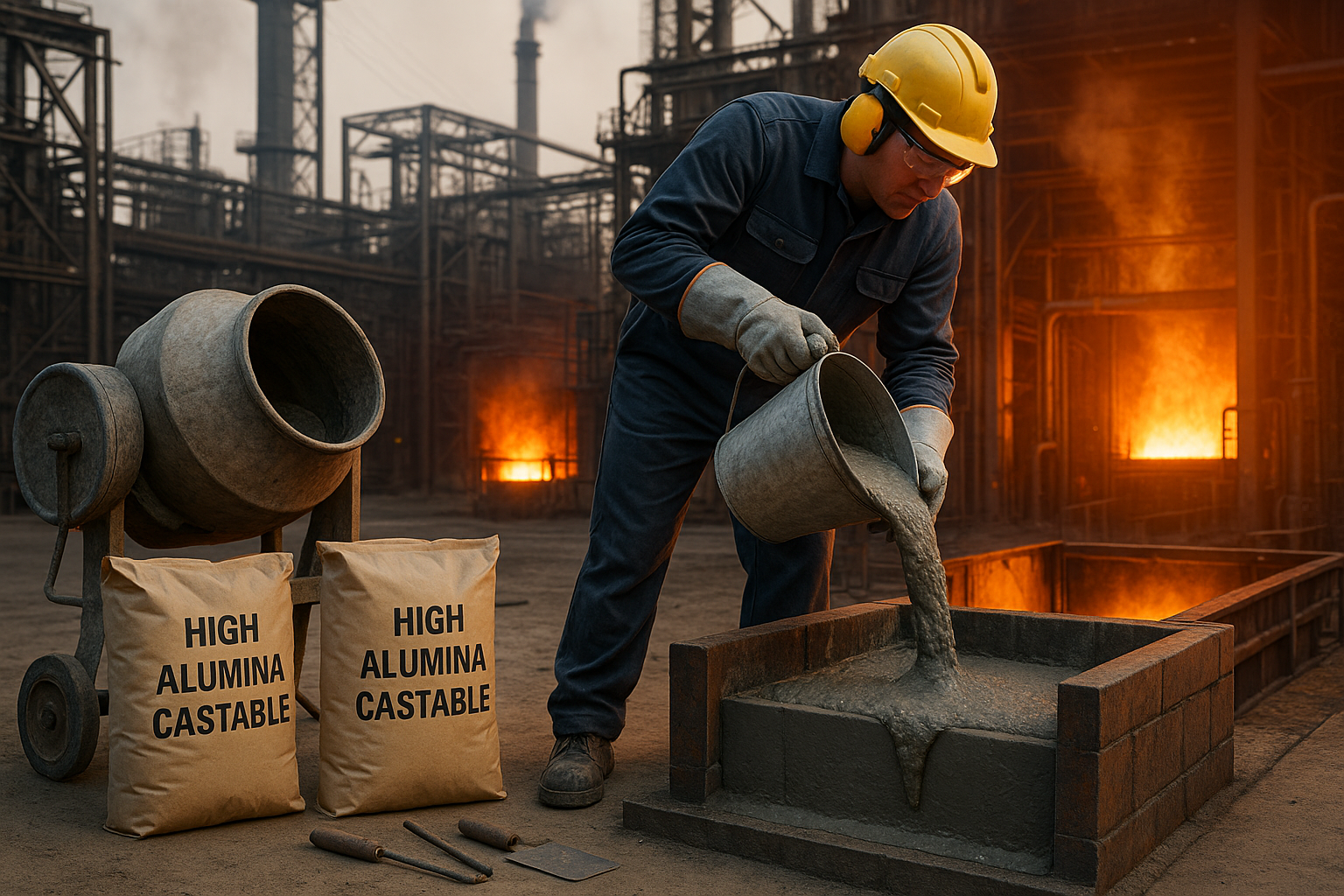
The performance of what is refractory castable materials heavily depends on proper installation. Following these best practices ensures optimal results.
Preparation
- Clean substrate surface thoroughly
- Remove all debris and loose material
- Install appropriate anchoring systems
- Construct proper forms/shuttering
Mixing
- Use clean water at recommended temperature
- Follow exact water-to-castable ratios
- Mix only the quantity that can be placed within working time
- Utilize mechanical mixers for consistent results
Placement
- Pour or pump material without segregation
- Ensure proper compaction (vibration when required)
- Avoid over-vibration which causes segregation
- Maintain uniform thickness
Curing and Drying
- Follow manufacturer’s curing schedule
- Protect from freezing or rapid drying
- Implement proper heat-up procedures
- Monitor first heating cycle carefully
Improper installation accounts for approximately 60% of premature castable failures. Following these guidelines maximizes the performance and lifespan of castable refractory cement installations.
Also Read: Installation of a Castable
Frequently Asked Questions
What is the difference between castable refractory and refractory brick?
The main difference is their form and installation method. Castable refractories come as dry mixtures that are mixed with water and poured into place and they create seamless linings. Refractory bricks are pre-formed shapes that must be laid individually with mortar joints.
What is the temperature range for castable refractories?
Depending on their composition, castable refractories can withstand temperatures from 800°C (1472°F) up to 1800°C (3272°F) for specialized high-alumina formulations.
How long do castable refractories last?
Properly selected and installed castable refractories typically last 3-10 years depending on the application, operating conditions, and maintenance practices.
What are castables made of?
Castables consist of refractory aggregates (like alumina, silica, or silicon carbide), binding agents (typically calcium aluminate cement), and various additives that control setting properties and enhance performance.
Can castable refractory be repaired?
Yes, damaged areas of castable refractory can often be repaired by removing the damaged section and installing new material, which bonds to the existing lining when properly applied.
What is the curing time for castable refractory?
Initial setting typically occurs within 24 hours, but full curing and strength development may take 3-7 days. The first heat-up must follow a controlled schedule to remove remaining moisture without damaging the lining.
Conclusion
What is castable refractory represents more than just a heat-resistant material—it’s a critical component enabling modern industrial processes that operate under extreme conditions. By understanding the types, applications, and best practices for these versatile materials, industries can make informed decisions that optimize performance while reducing operational costs. As manufacturing technologies advance, the importance of properly selected and installed castable refractories will only continue to grow.