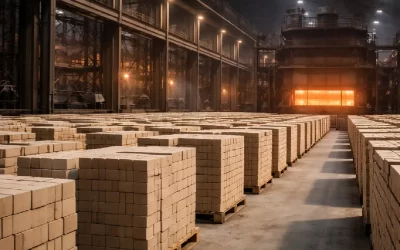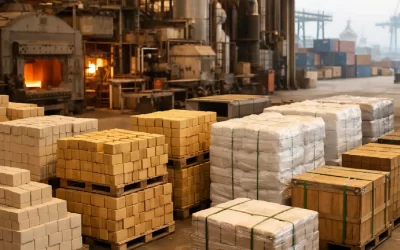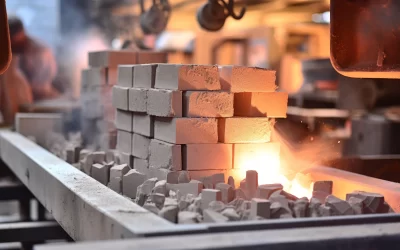

The steel and Iron Making Industry is one of the largest industries in the world. The steel and iron-making industry have a huge demand for refractory materials. Refractory materials are used in various processes such as smelting, melting, casting, etc. These refractory materials are also known as furnace lining materials.
There are several types of refractory materials used in the steel and Iron making industry. To help you know better the process, here’s the list of common refractory materials you may aware of.
Importance of Refractory Materials in Iron & Steel Industry:
Refractory materials are used in steel and iron manufacturing industries to prevent or reduce the formation of slag during smelting processes. The main function of these materials is to absorb heat from molten metal and transfer it to the surrounding atmosphere. This prevents the formation of large amounts of slag, which would otherwise cause problems such as increased production costs and environmental pollution.
Refractory materials are commonly classified into two types: primary (brick or fire-shaped) and secondary (specialities or monolithic). Primary refractories include silica sand, alumina, magnesia, zirconia, and other oxides. Secondary refractories include carbonaceous materials such as coke and graphite.
Refractories are Composed of…
Refractory materials are used in the iron and steel industry to protect the molten metal from oxidation and slag formation. These refractories are mainly composed of silica (SiO2), alumina (Al2O3), magnesia (MgO) and zirconia (ZrO2).
Silica-based refractories
Silica-based refractories are widely used in the iron and steel industries due to their high melting point, low cost, good thermal shock resistance, and ease of use. In addition, they have excellent corrosion resistance and chemical stability. However, these refractories are not suitable for applications where high temperatures are present.
Alumina-based refractories
Alumina-based refractoriness is commonly used in the iron and stainless steel industries. Due to its high melting point, low thermal conductivity, and high corrosion resistance, alumina-based refractory products are widely used in the metallurgical industry.
Magnesia-based refractories
Magnesia-based refractoriness is used in the iron and carbon steel industries. Magnesia-based products are characterized by their high melting points, low thermal conductivities, and high corrosion resistance.
Zirconia-based refractories
Zirconia-based refractory products are used in the iron, steel, and nonferrous metals industries. Zirconia-based refractories are characterized by their high mechanical strength, high-temperature stability, and high corrosion resistance at elevated temperatures.

Common Refractory Materials Used in Steel & Iron Industry:
Blast Furnace
A blast furnace is a type of metallurgical furnace that uses oxygen-rich gas to produce pig iron from iron ore. A blast furnace consists of three chambers: preheating chamber, a melting chamber, and a refining chamber. The preheating chamber heats the raw material before entering the melting chamber.
Hot Air Blast System
A hot air blast system is a method of heating steel using high-temperature air instead of direct flame. The hot air blast system is similar to a conventional electric arc furnace except that the electrodes are replaced with burners. Burners are placed around the top of the furnace and they use oxygen-rich gas to melt the steel.
Ladle
Ladles are containers used to collect molten metal after it comes out of the furnace. There are two types of ladders: single-ladder and double-ladder. Single-ladder ladders consist of a single container while double-ladder ladders have two containers connected together. Double-ladder ladders are generally used for larger amounts of molten metal than single-ladder ladders.
Cowper Torpedo
A Cowper torpedo is a device used to hold the molten metal in place until it cools enough to pour. Cowpers are commonly used in steel mills. They are designed to hold the molten metal in position until it solidifies. When the metal reaches the correct temperature, the operator lowers the Cowper into the pool of molten metal. The Cowper prevents the metal from splashing onto the surrounding area.
Crucible
Crucibles are containers used to hold the molten metal. They are used in steel mills to make castings. Crucibles are heated by either natural gas or electricity. The crucible is filled with molten metal and the operator pours the metal into moulds.
Graphite
Graphite is a naturally occurring mineral composed of carbon atoms arranged in flat sheets called graphene. Graphite is often used in steel making due to its low cost and high thermal conductivity. It is also used in crucibles and ladles because it does not react with molten metals.
One Stop Refractory Material Solution for Steel & Iron Production:
Ganeshas is one of the best places to go; if you’re looking for the best refractory materials for Steel & Iron Industry. Ganesha is a leading manufacturer of refractory materials in India that offers quality approved refractory materials at the best price you can ever think of. Want to crack the best deal? Get in touch with our team today!