Every industrial furnace, kiln, boiler, and high-temperature reactor has one thing in common: without a properly engineered refractory lining, it simply wouldn’t survive. Extreme heat, chemical exposure, and mechanical stress would tear through unprotected steel shells within hours. Yet for most people outside the industry, refractory lining remains one of those invisible, underappreciated engineering solutions holding modern manufacturing together.
This guide explains What is a Refractory Lining, the materials used, the different types available, What is Industrial Chimney Lining, and why getting it right is critical for safety, efficiency, and equipment longevity.
Key Takeaways
- A refractory lining is a protective heat shield. It lines the interior of furnaces, kilns, boilers, and reactors to protect the outer structure from extreme heat, chemical attack, and mechanical wear.
- Without it, industrial equipment fails fast. Unprotected steel shells would buckle, warp, or melt within hours of exposure to the temperatures these systems routinely operate at.
- There is no universal lining solution. Monolithic, brick, ceramic fibre, plastic, and composite systems each suit different temperatures, processes, and operational demands.
- Fireclay, high-alumina, silica, magnesia, and castables all behave differently under heat, chemical exposure, and mechanical stress. The right material depends entirely on the specific application.
- Refractory lining protects the hot face; insulation reduces heat loss behind it. High-performing furnace systems need both, working together.
- Poor surface prep, skipped curing schedules, or incorrect anchoring will cause even premium lining materials to fail prematurely.
- A well-designed refractory insulation lining can significantly cut fuel consumption by retaining heat within the process chamber rather than letting it escape.
What Is a Refractory Lining?
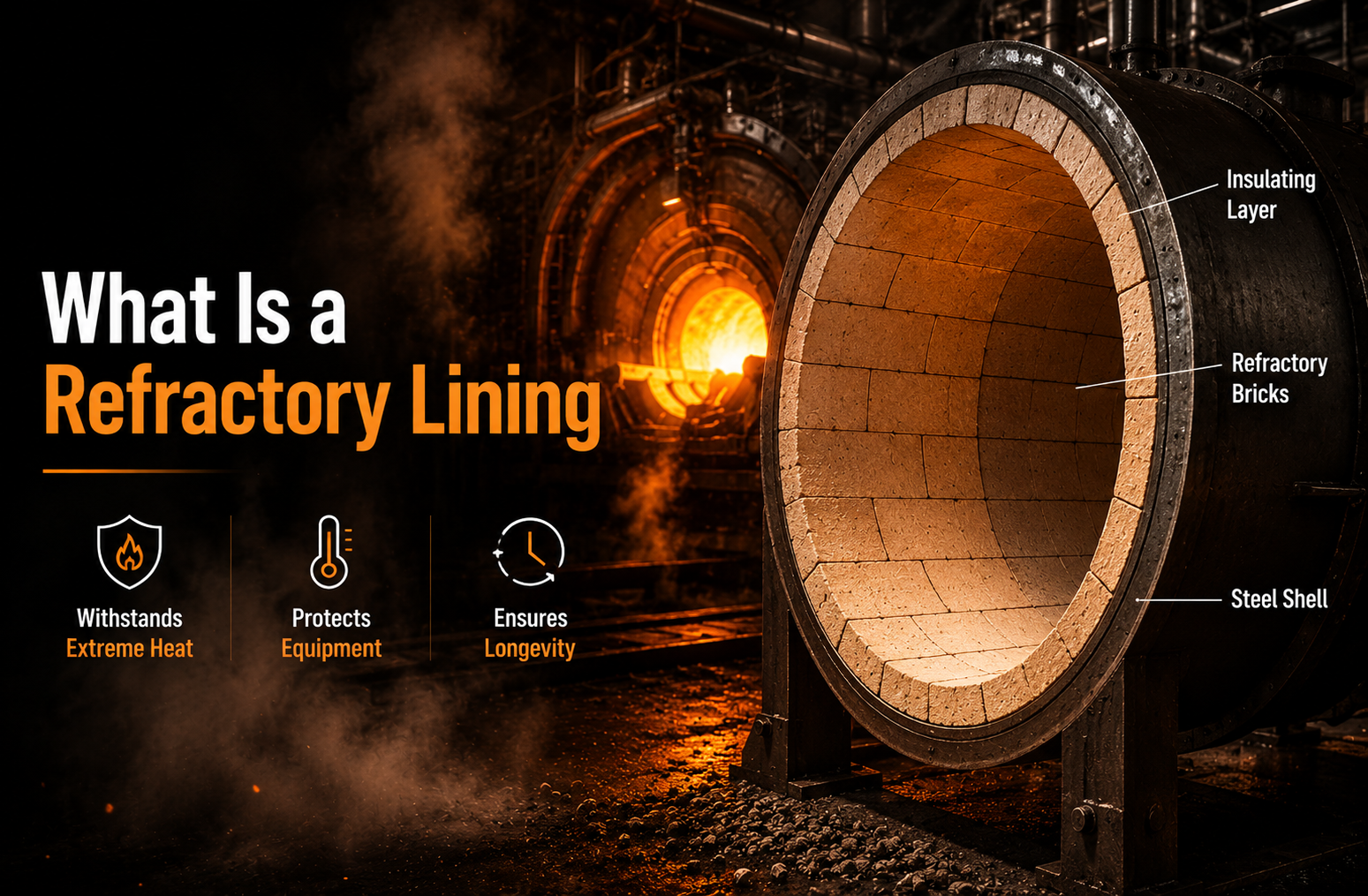
A refractory lining is a layer of heat-resistant material applied to the interior surfaces of furnaces, kilns, boilers, reactors, and other high-temperature industrial equipment. Its main job is to keep the equipment’s shell safe from extreme heat, chemical attack, and physical wear. It also keeps heat inside the system to maximize thermal efficiency.
The term “refractory” refers to materials that can withstand temperatures above 1,000°C without melting, deforming, or breaking down. We call the lining made of these materials a “refractory lining” when it’s put inside industrial equipment. It acts as a thermal and chemical shield between the process’s high heat and the equipment’s outside structure.
Without a properly designed furnace refractory lining, the steel casing of a furnace would quickly buckle, warp, or melt entirely. With it, the same furnace can operate reliably at temperatures exceeding 1,600°C for years.
Trusted names like Ganesha Refractory are among the leading Acid Resistant Bricks Manufacturers in India, supplying a comprehensive range of refractory lining materials and engineered solutions for industries that cannot afford equipment failure at high temperatures.
Why Is Refractory Lining Important?
The importance of refractory lining goes far beyond simply protecting the furnace shell. Here’s what a well-designed refractory lining in furnace applications actually delivers:
- Structural Protection: The lining absorbs heat that would otherwise reach and damage the outer steel shell, dramatically extending equipment service life.
- Thermal Efficiency: By retaining heat within the process chamber, refractory insulation lining reduces fuel consumption and helps maintain consistent operating temperatures, cutting energy costs significantly.
- Chemical Resistance: Many industrial processes involve corrosive gases, molten metals, slags, and acids. The right refractory lining material acts as a chemical barrier, preventing these substances from attacking the equipment structure.
- Safety: A failed or deteriorating refractory lining is a serious safety hazard. Hotspots, shell burn-throughs, and uncontrolled heat loss can result in fires, explosions, or catastrophic equipment failure. Proper lining design and regular refractory maintenance keep these risks in check.
- Process Integrity: In many high-temperature processes, contamination from the furnace structure could ruin the product. The refractory lining keeps the process environment clean and consistent.
Types of Refractory Lining in Industries
Refractory linings are not one-size-fits-all. The type used depends on the operating temperature, the nature of the industrial process, the chemicals involved, and the required service life. Here are the main categories:
Monolithic Refractory Lining
Monolithic linings are installed as a single, seamless structure using refractory castables, gunning mixes, or ramming masses. Because they have no joints, they offer excellent resistance to gas penetration and chemical attack. They are widely used in steel ladles, rotary kilns, and petrochemical reactors. Installation is faster than brick-based systems and allows complex shapes to be lined easily.
Brick Refractory Lining
Brick lining is one of the oldest and most reliable ways to line an industrial furnace. It uses pre-formed, heat-resistant bricks laid in a certain way to make a strong inner shell. Based on the conditions of use, different types of bricks are chosen, such as fireclay, high-alumina, silica, and magnesia. Brick linings are known for durability, ease of partial replacement, and predictable performance. They remain the preferred choice for glass furnaces, coke ovens, and cement rotary kilns.
Ceramic Fibre Lining
Ceramic fibre linings use lightweight, flexible blankets, boards, or modules made from alumino-silicate fibres. They are extremely low mass and heat up very quickly, making them ideal for intermittent or batch processes where fast thermal cycling is required. However, they are less suited to high-dust or high-velocity gas environments where erosion is a concern.
Plastic Refractory Lining
Plastic refractories are semi-plastic masses that can be rammed or pressed into position. They are particularly useful for patching or lining irregular areas and are commonly used in boiler refractory lining applications and incinerators.
Composite Lining Systems
In real life, many industrial furnaces have more than one type of lining. For example, a hot face made of dense high-alumina bricks is backed by an insulation brick layer, and then there is a ceramic fiber board against the steel shell. This layered approach balances thermal performance, chemical resistance, mechanical durability, and cost.
What Materials Are Used for Refractory Lining?
The choice of refractory lining material determines how well the lining performs across temperature, chemistry, and mechanical load. Common materials include:
Fireclay Refractories
Made from hydrated aluminium silicates, fireclay bricks are cost-effective and widely used for applications up to around 1,400°C. They are standard in boilers, blast furnaces, and general-purpose kilns.
High-Alumina Refractories
With alumina content ranging from 45% to over 90%, these materials offer superior performance at higher temperatures and are resistant to both acidic and basic slags. They are used in steel furnaces, cement kilns, and petrochemical reactors.
Silica Refractories
With over 93% SiO₂ content, silica bricks excel in acidic environments and coke ovens. They have excellent volume stability at high temperatures but are prone to thermal shock at lower temperature ranges.
Magnesia and Magnesia-Chrome Refractories
Highly basic materials that are suited to basic slag environments in steelmaking and copper smelting. They offer excellent resistance to high-temperature corrosion from basic slags.
Refractory Castables
These hydraulic or chemically bonded mixes are poured or pumped into place and set hard. Modern low-cement and ultra-low-cement castables offer performance that rivals pressed and fired bricks, with the added advantage of seamless installation.
Insulation Bricks and Boards
Used as backup layers, these materials minimize heat loss through the lining system, contributing to heat resistant lining performance and overall thermal efficiency.
Refractory Lining Installation Process Explained
The right way to install something is just as important as the right material. No matter how good the materials are, a lining that isn’t installed correctly will fail early. The key steps typically include:
- Surface Preparation: The steel shell or substrate must be clean, dry, and free of rust, oil, or old lining residue before installation begins.
- Anchoring: Metallic or ceramic anchors are welded to the shell to mechanically support monolithic or fibre linings and prevent delamination.
- Lining Installation: Depending on the system, bricks are laid with refractory mortar, castables are poured and vibrated into place, or ceramic fiber blankets are installed in overlapping layers.
- Curing and Drying: Newly installed castable or mortar-based linings must follow a strict controlled heat-up schedule to drive out moisture gradually. Skipping or rushing this step causes steam-induced cracking and dramatically shortens lining life.
- Inspection: Thermal imaging, physical inspection, and core sampling are used to verify lining integrity before commissioning.
Difference Between Refractory Lining and Insulation
A common question is how refractory lining differs from insulation. While both deal with heat management, they serve distinct roles. The main purpose of refractory lining is to protect the hot face from high temperatures, mechanical wear, and chemical attack. Insulation, on the other hand, is mostly about keeping heat in, so it doesn’t leave the system. In practice, modern industrial furnace lining systems combine both: a refractory hot face layer for protection and an insulating backup layer for energy efficiency. Understanding this difference is key to designing any effective heat-resistant lining system.
For related reading on specialized lining applications, explore how acid proof brick lining improves safety in corrosive environments and why it matters.
Conclusion
What a refractory lining does is much more than just protect against heat; it is what makes high-temperature industrial operations safe, efficient, and reliable. From protecting furnace shells and resisting chemical attack to conserving energy and extending equipment life, the right furnace refractory lining makes the difference between a process that performs and one that fails.
When you work with experienced refractory engineers like Ganesha Refractory, they will ensure that they design, install, and maintain your lining to the highest standard. This will secure your operations for years to come.
Frequently Asked Questions
Q1. What is a refractory lining?
A refractory lining is a layer of heat-resistant material installed inside furnaces, kilns, boilers, and reactors to protect the equipment structure from extreme heat, chemical attack, and mechanical wear while improving thermal efficiency.
Q2. Why is refractory lining important?
Without it, industrial furnaces would fail rapidly due to heat damage, chemical corrosion, and structural degradation. Refractory lining protects equipment, ensures process consistency, reduces energy consumption, and is critical for operational safety.
Q3. Where is refractory lining used?
Refractory linings are used across steel and iron making, cement and ceramics production, glass manufacturing, petrochemical processing, power generation, waste incineration, and any other industry involving high-temperature equipment.
Q4. What materials are used for refractory lining?
Common materials include fireclay bricks, high-alumina bricks, silica refractories, magnesia-based materials, refractory castables, ceramic fibres, and insulation boards. The right material depends on operating temperature, chemical environment, and mechanical demands.