Furnaces, kilns, boilers, and reactors all share one thing in common: they push materials to their absolute limits. The refractory lining inside them is what stands between smooth production and costly downtime. That’s why picking the right refractory material manufacturer in India isn’t just a matter of buying something; it’s an investment in the safety and performance of the plant over the long term.
With dozens of suppliers in the market, how do you separate a dependable partner from a risky one? Here are the key factors to consider when selecting a refractory supplier.
Key Takeaways
- ISO 9001:2015 certification, BIS compliance, and transparent test reports are non-negotiable markers of quality.
- Modern manufacturing technology and in-house R&D ensure consistent, high-temperature refractory materials and custom formulations for your furnace conditions.
- A refractory material exporter India trusts globally brings proven logistics, documentation, and packaging standards for international buyers.
- Judge suppliers on total cost of ownership and after-sales technical support, not just the lowest quoted price.
- Expertise in the field is important; the right supplier knows how industrial furnace refractories work in various plants, such as steel, cement, glass, and chemical.
1. Product Range and Specialization
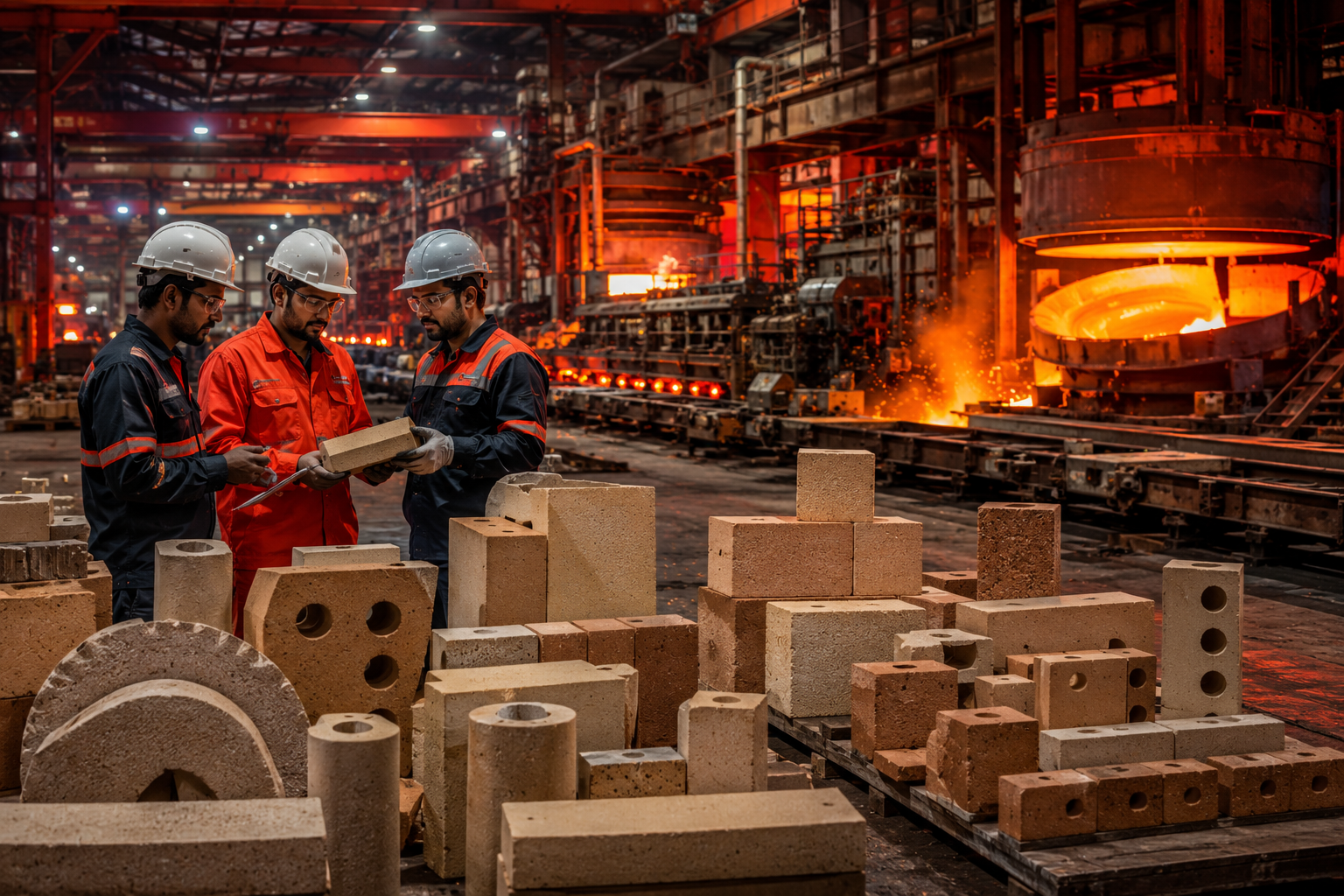
The best refractory material manufacturer in India for industrial applications should offer a complete portfolio, not just one product line. Look for a supplier who is both a refractory bricks manufacturer and a refractory castable manufacturer, covering:
- Fire bricks and fireclay bricks for furnaces and kilns
- High alumina and insulation bricks for thermal efficiency
- Acid resistant bricks for chemical plants and pickling lines
- Castables, mortars, and monolithics for complex shapes and repairs
A broad range means you can source complete refractory lining solutions from one partner instead of juggling multiple vendors, which simplifies procurement and ensures material compatibility.
2. Quality Certifications and Testing
Quality is non-negotiable when materials must endure temperatures of 1,400°C and above. A trusted manufacturer of high-temperature refractory materials should hold ISO 9001:2015 certification and follow recognized testing standards from bodies like the Bureau of Indian Standards. Ask for test reports covering refractoriness, cold crushing strength, apparent porosity, and thermal shock resistance before you commit.
This is one of the top qualities of a refractory material manufacturer: transparency. Reliable suppliers share datasheets and lab results willingly. If a vendor hesitates, treat it as a red flag.
3. Manufacturing Capability and Technology
How to find a trusted refractory brick manufacturer in India? Look behind the showroom and into the plant. Modern manufacturing facilities with automated pressing, controlled firing, and in-house R&D consistently outperform conventional setups. Companies such as Ganesha Refractory have invested in up-to-date technology to deliver materials that withstand temperatures up to 1,800°C with consistent quality batch after batch.
A strong R&D team also means the manufacturer can develop custom formulations for your specific furnace conditions rather than forcing a one-size-fits-all product.
4. Industry Experience and Application Knowledge
Industrial furnace refractories behave differently in a steel plant than in a glass furnace or cement kiln. An experienced manufacturer understands these differences and recommends the right material grade for each zone of your equipment. Find out what kinds of businesses potential suppliers work with, like steel, cement, glass, power, refineries, and chemicals. You can also ask for case studies or client references. If you want to see how a homegrown company built this kind of expertise, read how Ganeshas has Become a Leading Refractory Manufacturer in India.
5. Export Capability and Global Reach
If your operations span multiple countries, partner with a refractory material exporter India trusts internationally. A refractory manufacturer with export capabilities in India will have established logistics, export documentation experience, and packaging standards that protect materials during long transit. Worldwide, buyers increasingly prefer Indian manufacturers for their balance of quality and cost. This is a trend explored in detail in Why International Buyers Choose Indian Refractory manufacturers.
6. After-Sales Support and Technical Service
The relationship should not end at delivery. Top suppliers provide installation guidance, lining design support, and maintenance recommendations. An insulation bricks manufacturer or castable supplier who helps you optimize lining life delivers far more value than one who simply ships pallets.
7. Fair Pricing and Total Cost of Ownership
Cheapest is rarely the best in refractories. A slightly higher upfront price for longer-lasting material almost always wins on total cost, because relining a furnace means production downtime. Evaluate price against expected service life, not invoice value alone.
Final Thoughts
Choosing a reliable refractory material manufacturer in India requires verifying product range, certifications, manufacturing technology, industry experience, export capability, and support. Take the time to audit your shortlist against these factors, and you will secure a partner who keeps your furnaces running hotter, longer, and safer.
Frequently Asked Questions
How do I choose a reliable refractory material manufacturer in India?
Evaluate their product range, ISO certifications, manufacturing technology, industry experience, export capability, and after-sales technical support. Always request test reports and client references.
What certifications should a refractory manufacturer have?
At minimum, ISO 9001:2015 for quality management. Compliance with Bureau of Indian Standards (BIS) specifications and documented in-house quality testing are strong additional indicators.
Why is product quality important in refractory materials?
Refractories operate under extreme heat, chemical attack, and mechanical stress. Poor-quality materials fail prematurely, causing unplanned shutdowns, safety hazards, and expensive relining costs.
What types of refractory materials should a manufacturer offer?
A complete supplier should offer fire bricks, high alumina bricks, insulation bricks, acid resistant bricks, refractory castables, mortars, and custom-shaped refractories.
How can I verify the quality of refractory products?
Ask for material test certificates covering refractoriness, cold crushing strength, porosity, and thermal shock resistance. Reputable manufacturers also welcome plant visits and provide samples for trial.