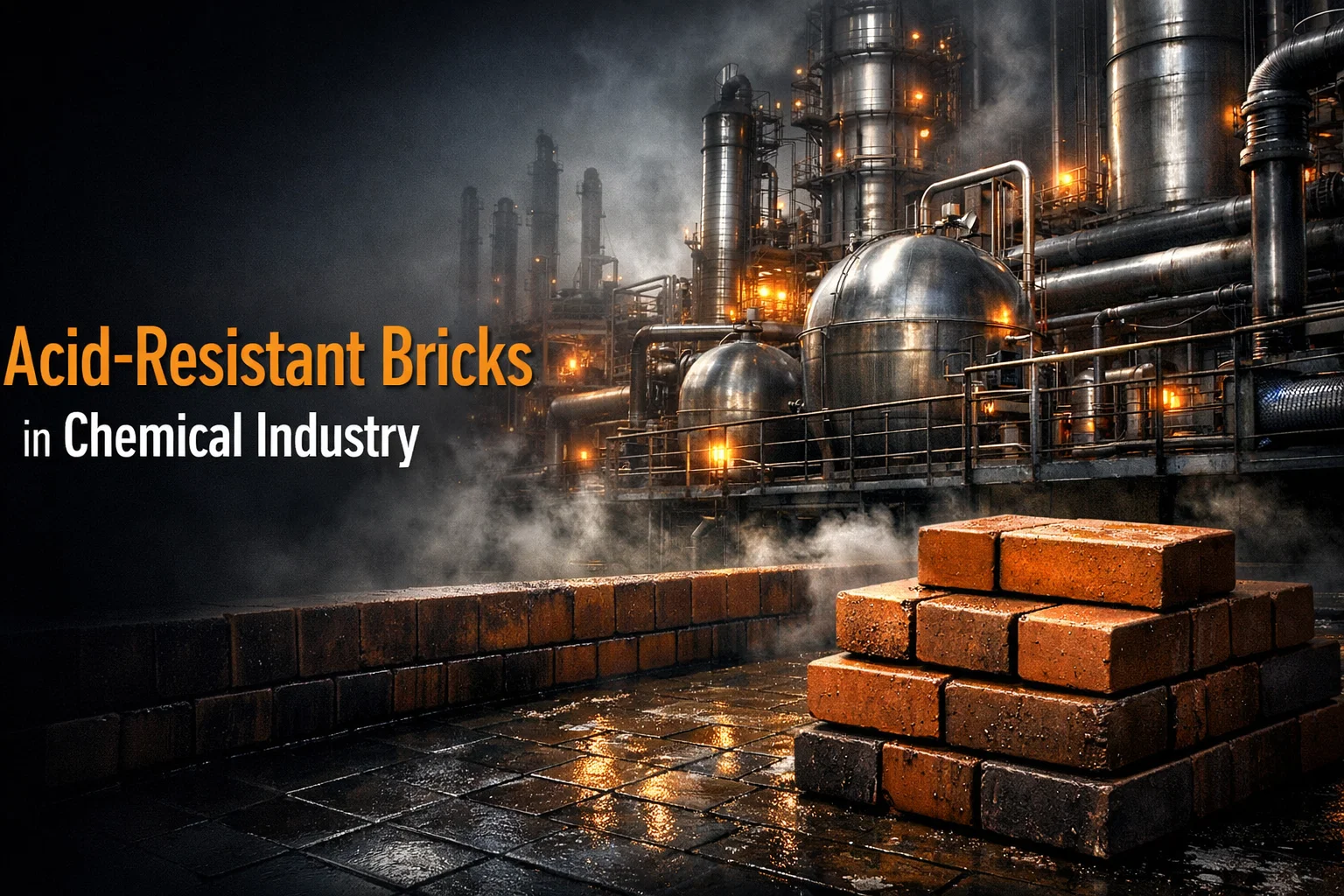
In modern industrial environments, especially in chemical processing units, corrosion is one of the biggest challenges. Exposure to aggressive acids, alkalis, and reactive compounds can quickly degrade conventional construction materials. This is where acid-resistant bricks in chemical industry applications become indispensable.
These specialized materials are designed to provide long-term industrial chemical protection, making them a cornerstone of safe and durable plant infrastructure.
Understanding Acid-Resistant Bricks
Acid-resistant bricks are high-performance acid-resistant masonry materials engineered to resist chemical attack. Manufactured from silica, fireclay, or other inert materials, they undergo high-temperature firing to achieve low porosity and superior strength.
These bricks are commonly used with acid-resistant mortar to form a complete acid-proof lining system that prevents chemical penetration and structural damage.
Here are some
- High chemical corrosion resistance
- Low water absorption
- High compressive strength
- Resistance to thermal shock
- Long operational lifespan
Because of these features, industrial acid-resistant bricks are widely used across chemical, pharmaceutical, fertilizer, and petrochemical industries.
What Are Acid-Resistant Bricks Used for in the Chemical Industry?
A common question is: what are acid-resistant bricks used for in the chemical industry?”The answer lies in their versatility and reliability.
Let us take a brief look at some of the key characteristics:
- Acid-resistant bricks for chemical storage tanks
- Chemical tank lining and containment systems
- Chemical plant flooring bricks for heavy-duty operations
- Drainage systems and acid channels
- Reactor vessels and chimneys
- Effluent treatment plants (ETP)
These acid-proof bricks’ uses ensure that structures remain intact even under continuous exposure to corrosive substances.
Types of Acid-Resistant Bricks
Understanding different Refractory Brick Types helps in selecting the right solution for your plant.
1. Refractory Acid-Resistant Bricks
These are designed to withstand both high temperatures and chemical exposure, making them ideal for reactors and furnaces.
2. Acid Resistant Lining Bricks
Used primarily for acid-resistant lining for chemical plants, these bricks provide a protective barrier in tanks and vessels.
3. Chemical-Resistant Bricks
Specifically engineered for areas exposed to a wide range of chemicals, including alkalis and solvents.
Each type plays a vital role in protective lining systems across industrial setups.
Best Acid-Resistant Bricks for Chemical Plants
Choosing the best acid-resistant bricks for chemical plants depends on several operational factors. Not all bricks are suitable for every application.
- Type of acid or chemical exposure
- Concentration and temperature levels
- Mechanical load and traffic
- Installation environment (indoor/outdoor)
- Compatibility with acid-resistant mortar
For example, acid-proof bricks for industrial flooring chemical plant applications require higher compressive strength compared to those used in tank linings.
Acid-Resistant Bricks for Chemical Storage Tanks
Storage tanks are one of the most critical components in chemical plants. Using acid-resistant bricks for chemical storage tanks ensures the following:
- Leak-proof containment
- Prevention of structural weakening
- Protection against long-term corrosion
These bricks are installed as part of a system for lining chemical tanks, often combined with specialized coatings for enhanced durability.
Acid Resistant Lining for Chemical Plants
Acid-resistant lining for chemical plants is essential for safeguarding equipment and infrastructure. This involves installing acid-resistant lining bricks along with mortar to create a continuous protective layer.
Here are some of the areas where lining is crucial:
- Pickling tanks
- Reaction vessels
- Storage pits
- Effluent channels
This acidproof lining acts as a barrier, preventing direct contact between chemicals and the structural base.
Chemical Plant Flooring Bricks
Flooring in chemical plants is constantly exposed to spills, heavy machinery, and foot traffic. Chemical plant flooring bricks must, therefore, offer the following:
- High strength
- Slip resistance
- Excellent chemical-resistant flooring properties
Acid-proof bricks for industrial flooring chemical plant environments are specifically designed to handle these challenges while maintaining safety standards.
Acid-Resistant Tiles vs. Bricks: Which Is Better?
The debate between acid-resistant tiles vs. bricks often arises when designing chemical facilities.
Let us look at some of the key differences:
| Feature | Acid-Resistant Tiles | Acid-Resistant Bricks |
| Thickness | Thinner | Thicker |
| Strength | Moderate | High |
| Application | Light-duty flooring | Heavy-duty industrial use |
| Durability | Lower | Higher |
For heavy-duty environments like chemical plants, refractory acid resistant bricks are typically the preferred choice.
If you are wondering what to look for when buying acid-resistant tiles, make sure to look at the official site of Ganesha’s Refractories.
How to Choose Acid-Resistant Bricks for Chemical Plant
If you’re wondering how to choose acid-resistant bricks for a chemical plant, the process involves technical evaluation and expert consultation.
Here is a checklist to keep in mind:
- Analyze chemical exposure conditions
- Check porosity and density
- Verify compressive strength
- Ensure compatibility with acid-resistant mortar
- Choose certified suppliers
Investing in the right acid-resistant masonry materials ensures long-term savings and operational safety.
Role of Acid-Resistant Mortar
Bricks alone cannot provide complete protection. Acid-resistant mortar plays a crucial role in sealing joints and maintaining structural integrity.
Let us look at some of the benefits:
- Prevents chemical seepage
- Enhances bonding strength
- Improves overall durability of acid-proof lining
Without proper mortar, even the best chemical-resistant bricks may fail prematurely.
Leading Suppliers and Manufacturers in India
India has a strong presence in the refractory and anti-corrosion materials market. A trusted name like Ganesha’s Refractories offers high-quality solutions tailored to industrial needs.
If you are searching for an acid-resistant brick supplier in India for the chemical industry, choosing an experienced manufacturer ensures the following:
- Consistent product quality
- Technical support
- Custom solutions for specific applications
Advantages of Using Acid-Resistant Bricks
Here are some of the benefits of using acid-resistant bricks:
1. Enhanced Durability
They significantly extend the lifespan of industrial structures.
2. Cost Efficiency
Reduced maintenance and replacement costs over time.
3. Safety Assurance
Minimizes risks associated with chemical leaks and structural failure.
4. Environmental Protection
Prevents contamination caused by chemical seepage.
Common Mistakes to Avoid
When using acid-proof bricks for the chemical industry, avoid these pitfalls:
- Using incompatible mortar
- Ignoring chemical compatibility
- Poor installation practices
- Choosing low-quality materials
Proper planning and expert guidance are essential for effective industrial chemical protection.
Conclusion
The importance of acid-resistant bricks in the chemical industry cannot be overstated. From acid-resistant brick applications in storage tanks to chemical plant flooring bricks, these materials form the backbone of corrosion-resistant infrastructure.
By selecting high-quality acid-resistant lining bricks, using proper acid-resistant mortar, and sourcing from reliable manufacturers like Ganesha’s Refractories, industries can ensure long-lasting protection and operational efficiency.
Buying the right anti-corrosion materials is not only smart, it’s necessary in a world where chemicals are everywhere.
Frequently Asked Questions
1. What are acid-resistant bricks used for in the chemical industry?
They are used for lining tanks, floors, drains, and equipment exposed to corrosive chemicals, ensuring long-term durability and safety.
2. Which acids can acid-resistant bricks withstand?
They can resist most mineral acids such as sulfuric, hydrochloric, and nitric acid. However, performance may vary depending on composition and concentration.
3. Where are acid-resistant bricks installed in chemical plants?
They are installed in storage tanks, flooring systems, chimneys, reactors, and effluent treatment units.
4. What is the difference between acid-resistant bricks and normal bricks?
Unlike regular bricks, acid-resistant bricks offer superior chemical corrosion resistance and lower porosity and are specifically designed for harsh industrial environments.