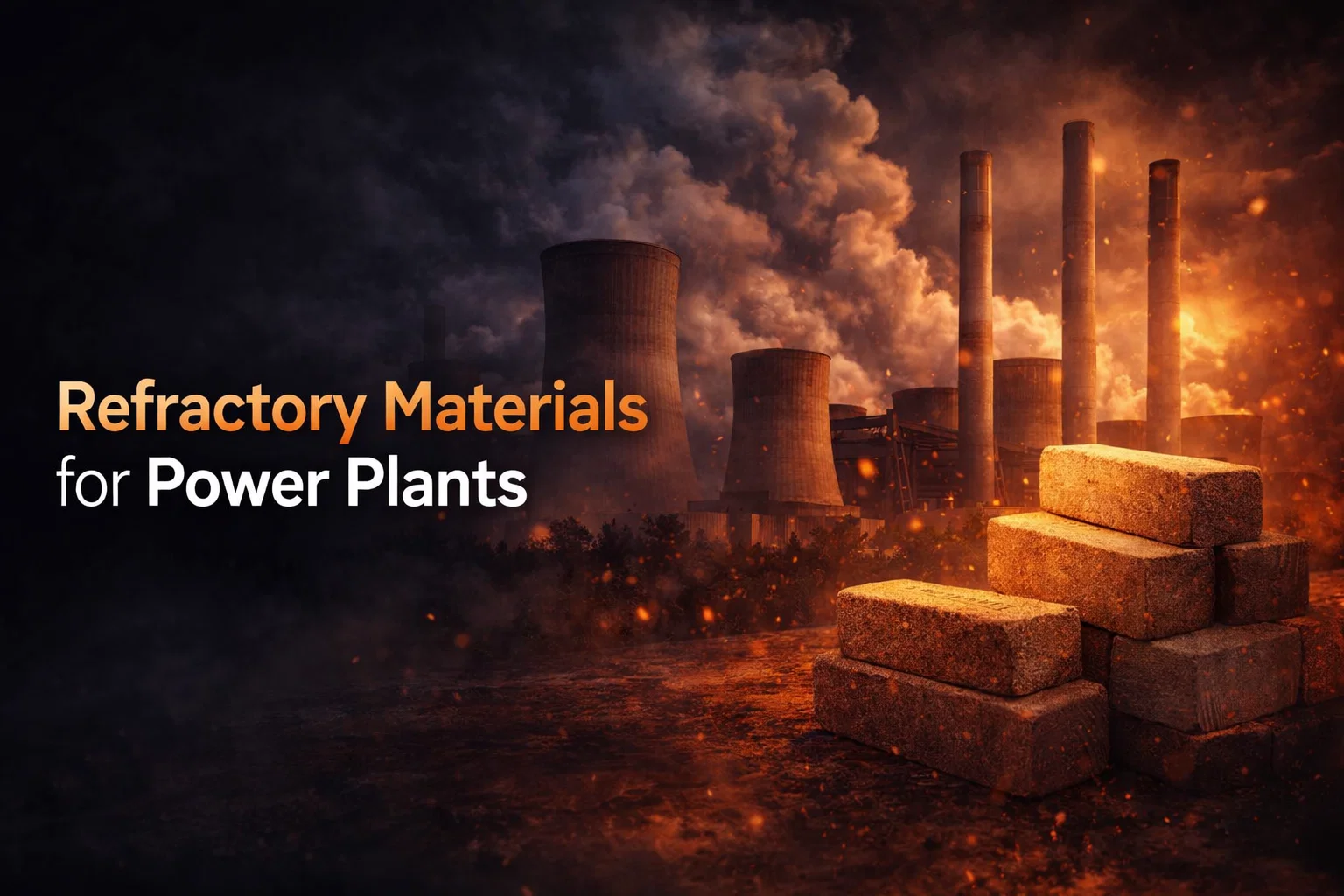
In thermal power plants, where boilers and furnaces operate under extreme heat and pressure, the choice of materials plays a critical role in ensuring efficiency, safety, and longevity.
This is where refractory materials for power plants become indispensable. These materials are specially designed to withstand high temperatures, resist wear, and maintain structural integrity in harsh operating environments.
From combustion chambers to heat recovery systems, refractory materials form the backbone of boiler performance. Selecting the right refractory lining can significantly improve thermal efficiency, reduce downtime, and extend equipment life.
Key Insights
- Refractory materials for power plants are heat-resistant linings used in boilers, furnaces, and combustion systems to withstand extreme temperatures.
- They play a key role in improving thermal efficiency by reducing heat loss and maintaining stable operating conditions.
- Common types include refractory bricks, castables, and insulating refractory materials for boilers.
- Critical applications include boiler furnace lining, combustion chambers, CFBC boilers, and heat recovery systems.
- Proper refractory lining design for power plant boilers helps extend equipment life and reduce fuel consumption.
- Regular refractory maintenance in power plants prevents breakdowns and ensures consistent performance.
What Are Refractory Materials for Power Plants?
Refractory materials are heat-resistant materials used to line boilers, furnaces, and other high-temperature equipment. In power plants, they are essential for protecting steel structures from extreme heat while improving insulation and energy efficiency.
Common types include:
- Refractory bricks for power plants
- Refractory castables for boilers
- Insulating refractory materials for boilers
These materials are carefully selected based on temperature range, chemical exposure, and mechanical stress.
Key Applications in Power Plants
Refractory materials are used across multiple sections of thermal power plants:
1. Boiler Furnace Lining
The boiler furnace is exposed to intense combustion temperatures. High-temperature refractory for boilers ensures structural protection and efficient heat containment.
2. Combustion Chambers
Refractory materials for combustion chambers provide thermal stability and resistance against chemical corrosion and slag attack.
3. CFBC and Fluidized Bed Boilers
Refractory materials for CFBC boilers and refractory materials for fluidized bed boilers must withstand severe abrasion due to circulating particles, making abrasion-resistant refractory materials essential.
4. Heat Recovery Systems
Refractory materials for heat recovery systems help retain heat, improving overall plant efficiency and reducing energy losses.
Types of Refractory Materials Used
Different applications require specific refractory solutions:
1. Refractory Bricks
These are widely used for structural lining. Products like insulating fire bricks offer excellent thermal insulation and strength.
2. Castable Refractories
Refractory castables for boilers are versatile and easy to install. They are ideal for complex shapes and repair work.
3. Insulating Refractories
Insulating refractory materials for boilers reduce heat loss and improve energy efficiency by maintaining internal temperatures.
4. High-Alumina and Low-Iron Refractories
These are preferred for high-temperature insulation and environments requiring strong chemical resistance.
Refractory Lining Design for Power Plant Boilers
Effective refractory lining design for power plant boilers is critical for long-term performance.
Engineers consider multiple factors, such as:
- Operating temperature
- Thermal cycling conditions
- Abrasion and erosion levels
- Chemical exposure
A well-designed refractory lining for boilers ensures optimal heat retention, reduced fuel consumption, and minimal maintenance.
How Refractory Materials Improve Power Plant Efficiency
Understanding how refractory materials improve thermal power plant efficiency is key for operators.
These materials:
- Minimise heat loss through proper insulation
- Enhance combustion efficiency by maintaining stable temperatures
- Reduce fuel consumption
- Protect equipment from thermal damage
By improving heat containment, refractory insulation for power plant furnaces directly contributes to higher operational efficiency and lower energy costs.
Selection of Refractory Materials for Thermal Power Plants
Choosing the right refractory materials requires a detailed evaluation of operating conditions. The selection of refractory materials for thermal power plants depends on:
- Temperature range and thermal shock resistance refractory properties
- Mechanical strength and abrasion resistance
- Chemical compatibility with fuel and ash
- Installation method (e.g., refractory castable installation)
Referring to the properties of refractory material helps engineers make informed decisions based on performance characteristics.
Refractory Maintenance in Power Plants
Even the best materials require proper upkeep. Refractory maintenance in power plants is essential to ensure consistent performance and avoid unexpected shutdowns.
Key practices include the following:
- Regular inspection of boiler furnace lining
- Monitoring for cracks, erosion, or spalling
- Timely repair using suitable castables or bricks
- Proper installation and curing techniques
Partnering with trusted providers like Ganeshas Refractory ensures high-quality materials and expert support for maintenance and installation.
Conclusion
Refractory materials are a critical component in the efficient and safe operation of power plants. Their role, from protecting combustion chambers to enhancing boiler efficiency, is of utmost importance.
By selecting the right refractory materials for power plants and ensuring proper installation and maintenance, operators can significantly improve plant performance, reduce costs, and extend equipment lifespan.
Frequently Asked Questions
1. What are refractory materials used in thermal power plants?
Refractory materials are heat-resistant materials used to line boilers, furnaces, and combustion chambers; they protect them from high temperatures and improve insulation.
2. Why are refractory materials important in thermal power plants?
They help retain heat, improve efficiency, protect equipment from damage, and reduce fuel consumption and maintenance costs.
3. Which refractory materials are commonly used in power plant boilers?
Common materials include refractory bricks, castables, insulating refractories, and high-alumina materials designed for high-temperature applications.
4. What is the role of refractory lining in boilers?
Refractory lining for boilers acts as a thermal barrier, maintaining internal temperatures while protecting the outer structure from heat damage.
5. What types of boilers require refractory materials?
Boilers such as CFBC boilers, fluidized bed boilers, and conventional high-temperature boilers all require refractory materials for safe and efficient operation.