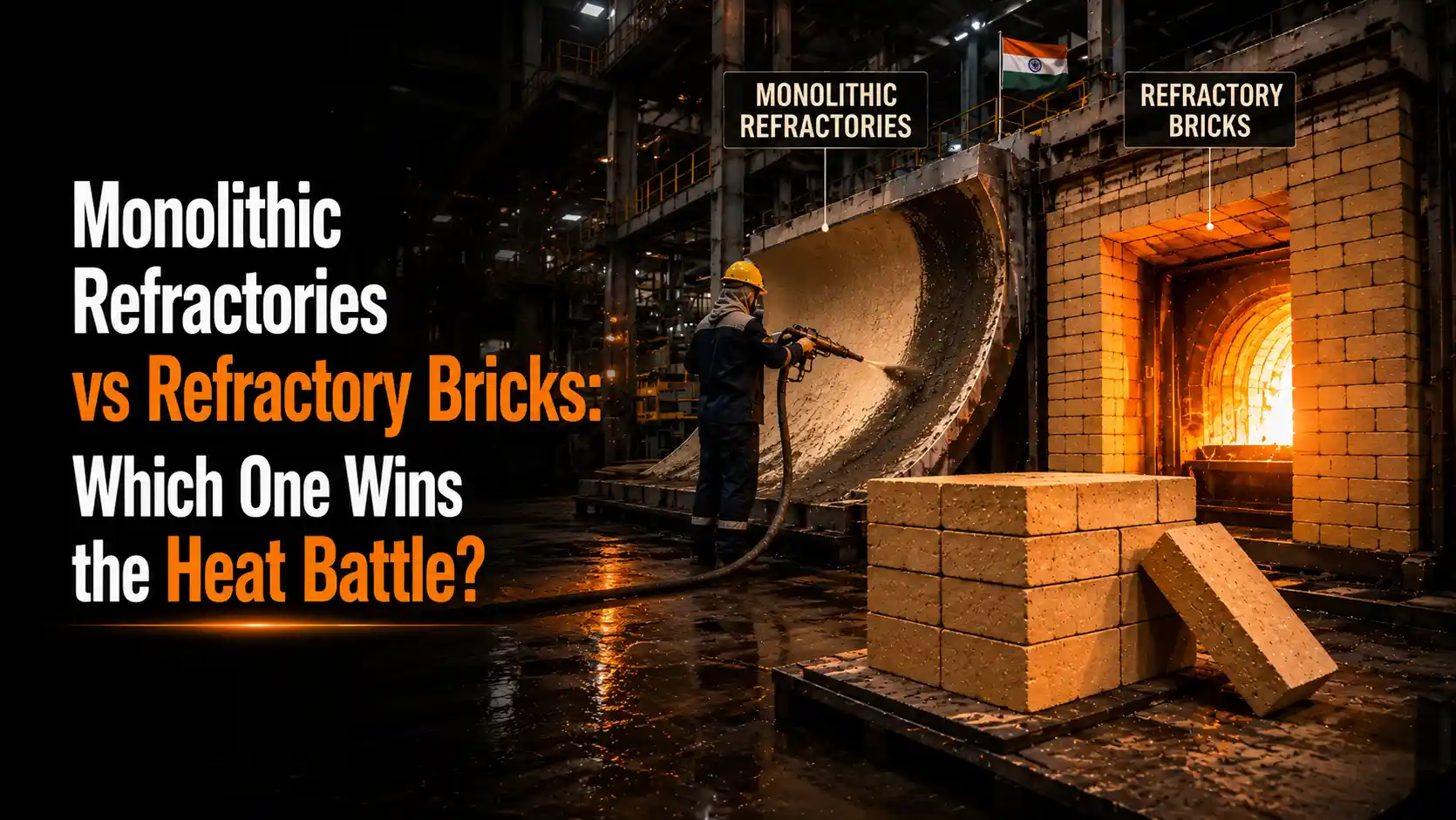
Every furnace, kiln, or ladle lining eventually comes down to one big decision: do you go with monolithic refractories or refractory bricks? Both are built to survive extreme heat, chemical attack, and mechanical stress, yet they behave very differently once installed. If you’re planning a new lining or relining an existing furnace, understanding monolithic refractories vs refractory bricks can save you real money, downtime, and maintenance headaches down the line.
In this blog, we break down what each option is, how they compare, and which one might be the better fit for your application.
Key Takeaways
- Monolithic refractories are flat, unshaped materials that are put in place by casting, gunning, or ramming. They are great for making complicated shapes quickly.
- For high-wear areas, refractory bricks have been shown to be strong. They are made of pre-fired, pre-shaped blocks that are laid with mortar.
- Monolithics generally cost less to install; bricks can offer longer life in abrasive, high-load conditions.
- Repairing monolithic refractory lining is simpler than replacing sections of brick lining.
- Which one is best depends on the type of furnace you have, the temperature range it can handle, and your needs as an operator. Usually, a mix of the two works best.
What Are Monolithic Refractories?
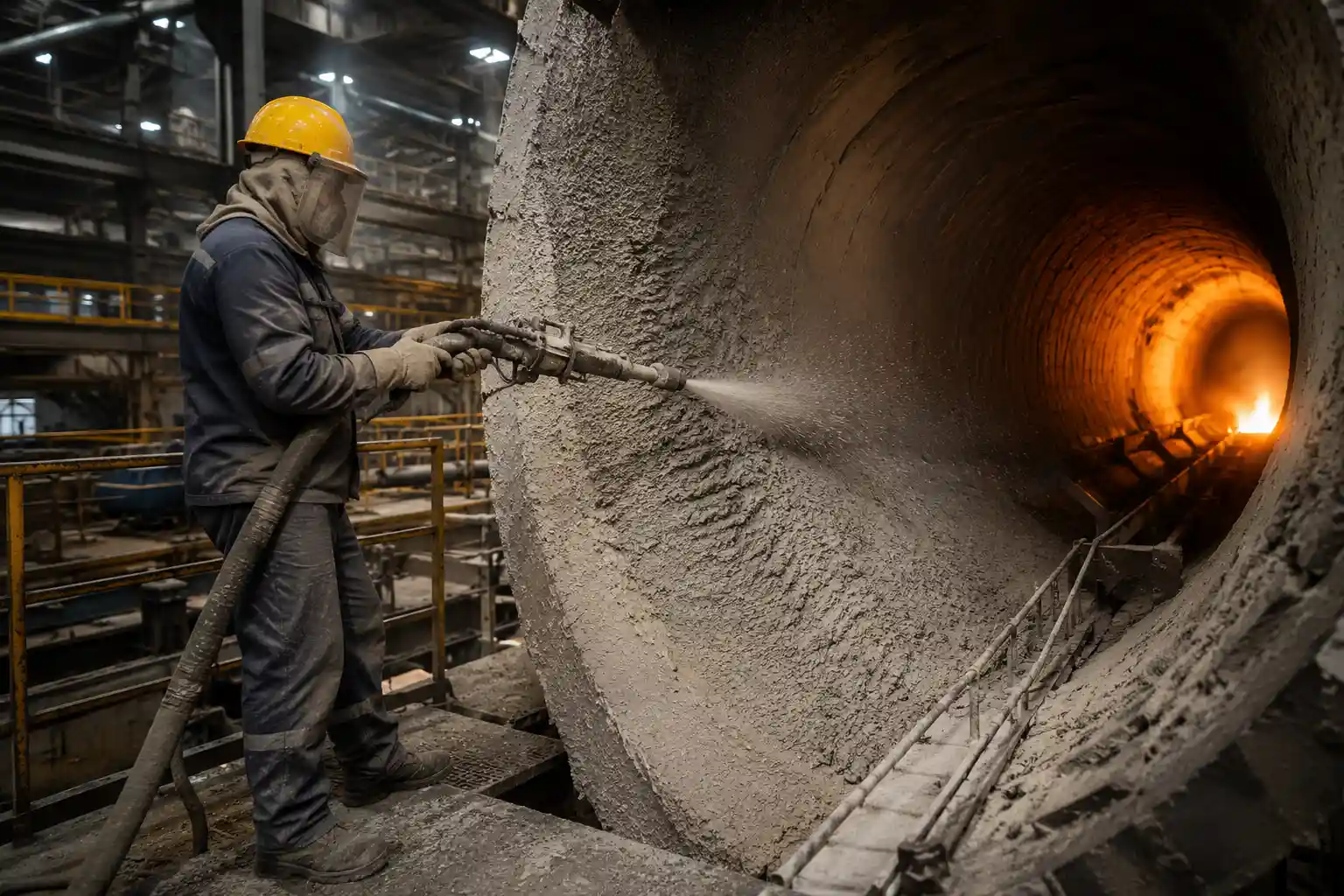
Monolithic refractory materials are unshaped refractory products that are mixed on-site and applied as a single, joint-free mass. They don’t come pre-formed like bricks do; instead, they’re sent as a powder or paste and are put together using casting, gunning, ramming, or shotcreting. Common types of monolithic refractories include castable refractory, ramming mass, plastic refractories, and mortars.
Because they form a continuous, seamless lining, monolithic refractory lining eliminates the weak points that joints between bricks can create. Popular categories include:
- Castable refractory (including high alumina castable, low cement castable, and ultra low cement castable)
- Insulating castable for reduced heat loss
- Refractory concrete and gunning mixes for fast repairs
What Are Refractory Bricks?
Refractory bricks are pre-shaped, pre-fired blocks that are laid manually, much like traditional construction bricks, using refractory mortar to bind them together. They’ve been the traditional choice in industrial furnace refractory linings for decades because of their proven strength and predictable performance.
Fireclay bricks, high alumina bricks, silica bricks, and magnesia bricks are all common types of refractory bricks. Each one works best in a different range of temperatures and chemicals. You can explore Ganesha’s range of Refractory Fire Bricks to see how different brick grades are engineered for specific furnace conditions.
Monolithic Refractories vs Refractory Bricks: Key Differences
Here are the key differences between monolithic refractories and refractory bricks:
1. Installation Methods
Lining with refractory bricks takes a lot of work because skilled masons have to cut, fit, and lay the bricks, which takes time and care. Monolithic refractory materials, on the other hand, can be poured, sprayed, or rammed into place, making installation faster and more adaptable to complex shapes and curved surfaces. This is one of the biggest points in the installation difference between monolithic refractories and bricks.
2. Structural Integrity
Because monolithic linings are essentially jointless, they avoid the gaps where slag, gas, or molten material can penetrate over time. Brick linings depend on mortar joints, which are strong but can still become weak spots, especially when temperatures change.
3. Cost Comparison
When it comes to the cost comparison of monolithic refractories and refractory bricks, monolithics generally have lower installation costs due to reduced labor and faster turnaround. Bricks may cost more to install but can offer longer service life in certain high-abrasion or high-load applications, which can offset the higher upfront labor cost over time.
4. Durability
The durability of monolithic refractories vs refractory bricks depends heavily on the application. Bricks tend to perform better under continuous mechanical loading and abrasive conditions, since their pre-fired structure is inherently denser. Monolithics, especially modern low cement and ultra low cement castables, have closed much of this gap and now offer excellent resistance to thermal shock and spalling.
5. Repair and Maintenance
It is easier to fix monolithic refractory lining because damaged areas can be fixed by gunning or casting without taking the whole structure apart. Brick linings usually require more extensive rework since individual bricks need to be removed and replaced.
Which Is Better: Monolithic Refractories or Refractory Bricks?
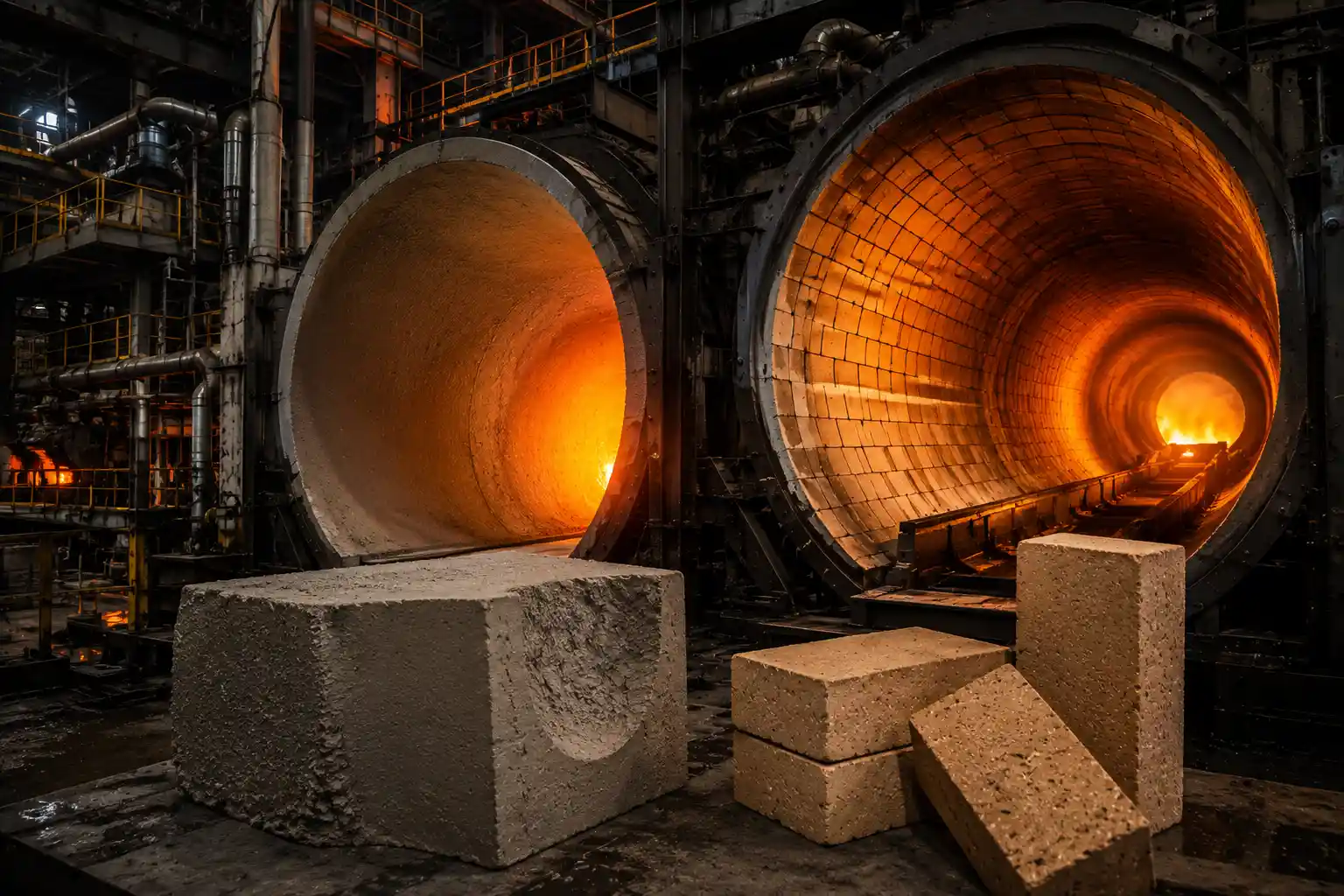
It depends on the type of furnace you have, the temperature it needs to work at, and your budget. In general:
- Choose monolithic refractories for irregular shapes, fast installation timelines, and applications needing seamless, crack-resistant linings.
- Choose refractory bricks for high-wear zones, applications with heavy mechanical stress, or where long-established performance data is critical.
Many modern furnace refractory linings use both bricks and monolithics. Bricks are used for structural zones, and monolithics are used for complex geometries or quick repairs. This hybrid approach is increasingly common in industrial refractory materials selection across steel, cement, and glass industries.
Final Thoughts
Both monolithic refractories and refractory bricks remain essential to high temperature refractory materials used across steel, cement, glass, and power generation industries. Understanding the Importance Of Refractory Materials in your specific process is the first step to choosing the right refractory lining system for long-term efficiency and safety.
If you’re unsure which option suits your furnace or kiln, the team at Ganesha Refractory can help you evaluate your application and recommend the right refractory material applications for your industry.
As one of the trusted Refractories Material Manufacturers , Ganesha Refractory offers a wide range of castables, bricks, and mortars engineered for reliable performance under extreme conditions.
FAQs
What are monolithic refractories?
Unshaped refractory materials, like castables, ramming mass, and plastic refractories, are mixed and put in place on-site to make a lining that doesn’t have any joints.
What are refractory bricks?
Refractory bricks are pre-shaped, pre-fired blocks made from materials like fireclay, high alumina, silica, or magnesia, laid using refractory mortar to build a furnace or kiln lining.
What is the difference between monolithic refractories and refractory bricks?
The main difference lies in installation and structure: monolithics are unshaped and applied as a single continuous mass, while bricks are pre-formed units assembled with mortar joints. This affects installation speed, cost, and how each performs under thermal and mechanical stress.
Which is better: monolithic refractories or refractory bricks?
It depends on the application. Monolithic refractories suit complex shapes and faster installations, while refractory bricks are often preferred for high-wear, high-load zones. Many industrial linings use a combination of both.
Are monolithic refractories more durable than refractory bricks?
Not always. Bricks generally offer better abrasion and load resistance, while monolithics excel in resisting spalling and thermal shock, especially with modern low cement and ultra low cement castable formulations. Durability ultimately depends on the specific operating conditions.