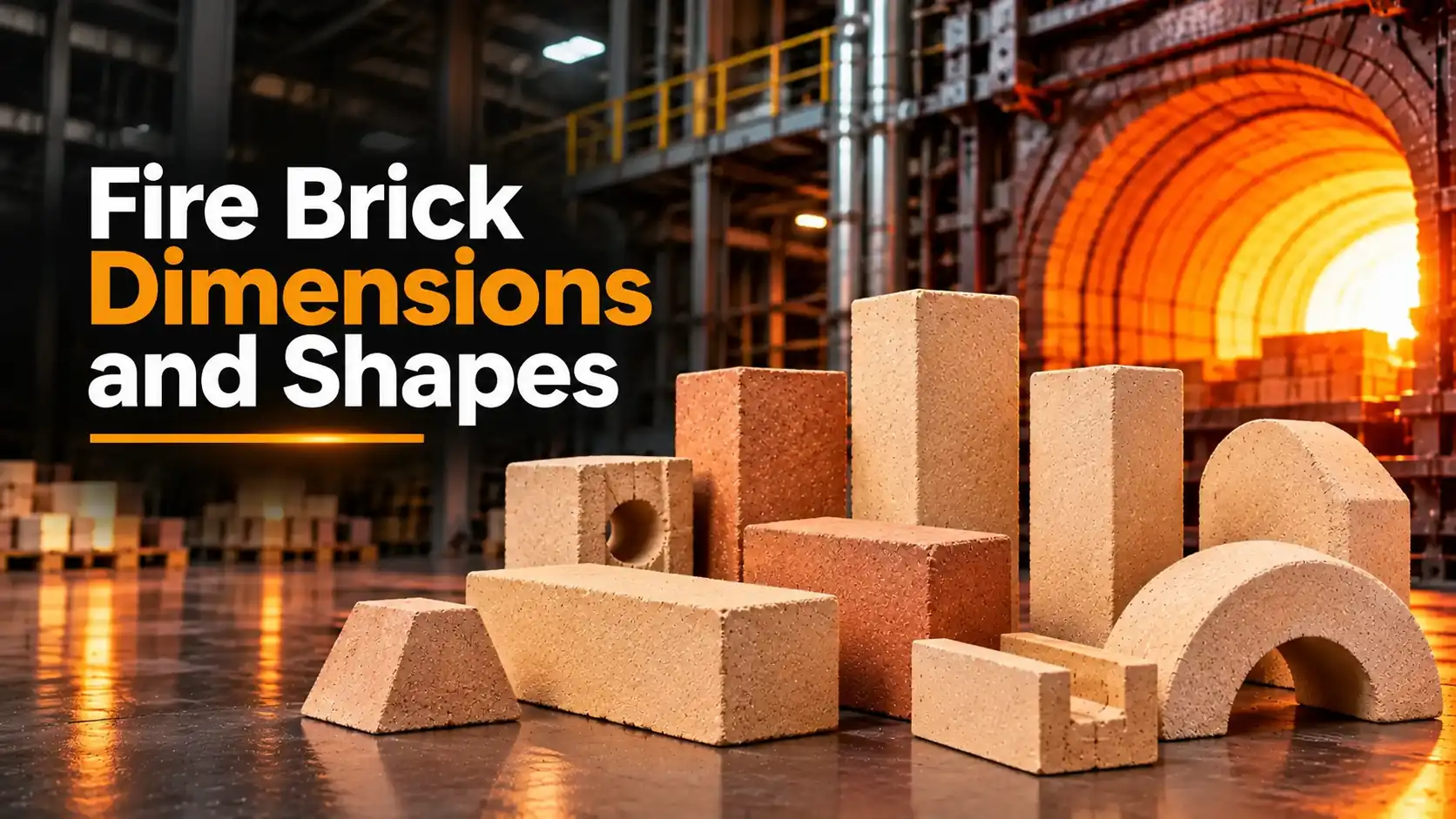
Selecting the right fire brick starts with understanding its dimensions and shapes. The choice directly affects how a furnace lining performs under repeated heating cycles, how well the structure holds its form and how long the installation lasts. This guide covers standard fire brick dimensions and shapes used across industrial furnaces, kilns and other high-temperature applications.
Key Takeaways
- The standard T3 fire brick (230 × 114 × 65 mm) is the most widely used format across kilns, furnaces and industrial linings
- The SK grading system classifies fire bricks by refractoriness, with SK-32 and SK-40 among the most common industrial grades
- Straight bricks suit flat walls and floors; arch, wedge, skew and tapered shapes handle curved and angled furnace sections
- High alumina grades are required for furnaces operating above 1400°C, where standard fireclay bricks soften under sustained thermal load
- Manufacturing tolerances directly affect joint width and lining integrity, particularly for shaped bricks in circular or arched structures
- Custom-shaped and non-standard fire bricks are available for special furnace designs and demanding industrial applications
Standard Fire Brick Dimensions
The most widely used format is the T3 standard brick, measuring 230 × 114 × 65 mm. Used in nearly every kiln and furnace type, this size balances handling weight with surface coverage. Larger formats such as T6 at 250 × 123 × 65 mm are used to speed bricklaying across wider walls. SK-32 refractory fire bricks follow standard brick geometry and are among the most common grades for industrial furnace linings.
Brick grades are defined by alumina content and refractoriness rating. The SK system classifies bricks by their softening temperature under load, with higher numbers indicating greater heat resistance. SK-40 high alumina bricks contain a higher alumina percentage than standard grades and are specified for applications requiring sustained performance above 1500°C, such as iron and steel furnaces.
Shapes Used in Industrial Refractory Linings
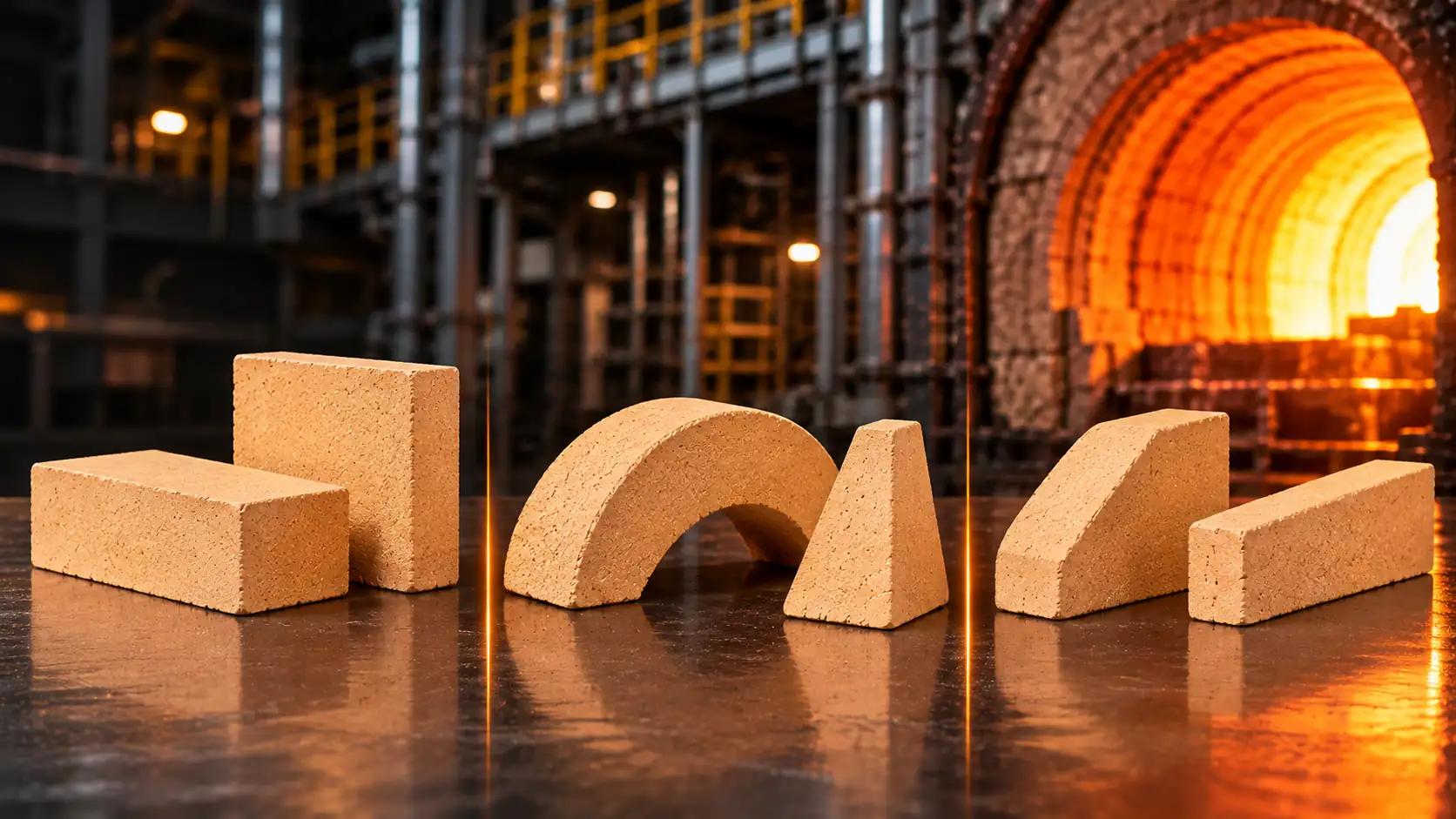
Refractory brick shapes determine how curved surfaces, arched ceilings and irregular wall sections are built.
Straight Bricks
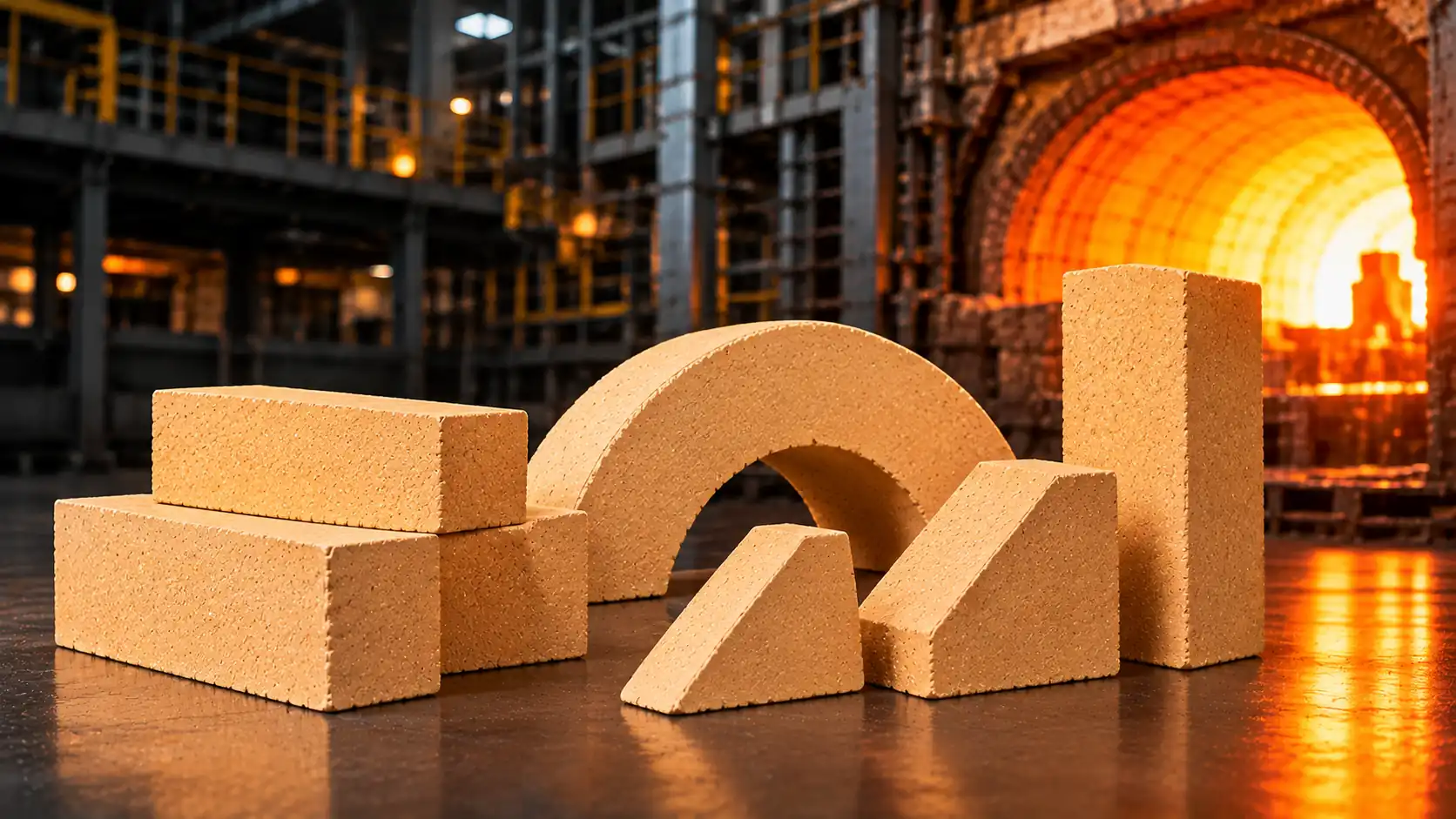
Straight bricks have uniform dimensions on all faces and are the standard choice for flat walls, floors and partition linings. They stack predictably and are the simplest to work with on-site. Industrial refractory fire bricks in straight format are manufactured to standard specifications, allowing bricks from different batches to be used together without joint alignment problems.
Arch and Wedge Bricks
Arch bricks, also called axe bricks, taper across their width or height to form curved profiles in furnace ceilings and kiln vaults. The degree of taper determines the arc radius, making it important to select the arch type that matches the furnace design. Wedge bricks taper toward one end and are used at the crown of arches and in kiln door construction.
Skew and Tapered Bricks
Skew bricks have an angled end face, allowing them to form transitions between walls meeting at non-right angles. Tapered bricks vary in thickness along their length and are used to construct the circular sections of rotary kilns and lime kilns. Both shapes require precise manufacturing tolerances to maintain tight joints in the finished lining.
Selecting the Right Fire Brick Size and Shape
Selection depends on the operating temperature, chemical environment and geometric requirements of the furnace. Standard straight bricks cover most flat-walled applications. Furnaces operating above 1400°C require grades with elevated alumina content. High alumina refractory bricks are specified for steel ladles, ceramic kilns and industrial furnaces where standard fireclay grades would soften or deform under sustained load.
Where standard brick sizes do not fit the application, industrial fire brick alternatives may offer a practical solution. Castable refractory materials, ceramic fiber modules and prefabricated shapes are used in areas where standard bricks create excessive joints or cannot be cut to fit precisely.
Selecting the Right Fire Brick with Confidence
Matching fire brick dimensions and shapes to the requirements of a furnace lining is a technical decision that affects both performance and operating cost. The guide above covers the standard formats, grading systems and profiles used across the most common industrial applications.
Ganesha’s Refractory supplies a full range of industrial fire bricks across standard dimensions and grades, from common SK-32 and SK-40 formats to custom shaped refractory bricks for demanding furnace applications.
Frequently Asked Questions
What are the standard dimensions of fire bricks?
Fire brick dimensions and shapes vary by application. The standard T3 brick measures 230 × 114 × 65 mm and covers most kiln and furnace wall applications.
What are the different shapes of refractory fire bricks?
The main shapes are straight, arch (for curved profiles), wedge (for arched crowns), skew (for angled wall transitions) and tapered (for circular kiln sections).
How do I choose the right fire brick size for an industrial furnace?
Match brick grade to operating temperature, shape to furnace geometry and size to structural requirements. Standard straight bricks suit flat walls; shaped bricks handle arches and circular kiln sections.
What is the difference between straight and wedge-shaped fire bricks?
Straight bricks have equal dimensions on all faces and are used for flat walls and floors. Wedge bricks taper toward one end, creating the angled joints needed for arches and curved furnace sections.
Are custom-sized refractory bricks available for industrial applications?
Yes, custom-shaped and non-standard fire bricks are manufactured for special furnace designs. The supplier’s engineering team reviews requirements and produces bricks to specified dimensions and tolerances.