
Refractory materials have been the backbone of various industrial sectors. When it comes to the construction industry, firebricks are at the top. Whether constructing or renovating fireplaces, ovens, or kilns, firebricks have long been the go-to option due to their exceptional heat resistance and insulation properties. For a better understanding of available options, read our guide to different types of refractory bricks.
However, there are times when we need to explore alternatives that can provide similar functionality at a more affordable cost. This quest for alternative solutions has led many individuals to wonder: What should I choose as an alternative to firebricks that still works effectively? If so, you are one of those, here’s the article you should not miss out on.
The Definition of Firebricks
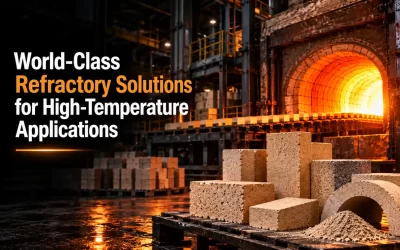
Firebrick, also known as fireclay bricks and refractory bricks, is a type of ceramic material that is frequently used in high-temperature applications such as ovens, kilns, and furnaces. These refractory materials are designed to survive exceptionally high temperatures of up to 2000 degrees Celsius while maintaining the required lower thermal conductivity. Furthermore, fire bricks are usually white or yellowish-white in color, with variations of orange-red, and they weigh around 3 kg each with a relatively high fusion point.
Approx Composition of Firebricks:
Silica – 60% to 93%
Alumina – 2% to 36%
Others (Lime, magnesia, iron, etc) – 2% to 5%
4 Best Alternatives to Firebrick
The following are the best alternatives to Firebrick that offer the same effectiveness at more better cost price. Have a look!
Red Solid Bricks:

Red solid bricks, commonly known as ordinary red clay bricks, are among the most oldest construction materials. Red bricks are made up of a basic construction material comprised of burnt clay or a sand-lime admixture. They can retain heat and may be suitable for certain general construction or low-temperature applications. However, ordinary red bricks should not automatically be used as a substitute for firebricks in high-temperature areas. Read more about the differences between fire bricks and common bricks.
Refractory Concrete:
Refractory concrete, also known as castable refractory, is a composite material composed of aggregates, binders, and additives that can be poured or cast into multiple shapes. It is useful for fireplaces, ovens, and kilns because it provides superior thermal insulation and can endure high temperatures. It has the advantage of being less expensive than firebricks while still offering adequate heat resistance. To ensure its efficiency and longevity, however, it is critical to buy high-quality refractory castables and adhere to precise installation standards. Looking for quality castable refractory – Ganeshas has got you covered.
Soapstone:
Soapstone is a solid, heat-resistant substance that can be used in place of firebricks. It has great thermal conductivity and can hold heat for an extended period of time. Because of its capacity to endure high temperatures, soapstone is frequently used for lining fireboxes and creating fireplaces as an alternative to firebricks.
Sandstone:
To identify an alternative to firebricks, the material should be well-fired and have temperature resistance qualities. As a result, Sandstone is a natural stone that can be utilized in place of firebricks. It is resistant to heat and can sustain high temperatures. Sandstone may be cut and sculpted to specific specifications, resulting in a versatile material for use in fireplaces and other high-temperature systems.
Final Thought
When searching for alternatives to firebricks, it is crucial to balance functionality, temperature resistance, and cost-effectiveness. The materials mentioned above may suit certain applications, but their suitability should be evaluated against the operating conditions and safety requirements. For help choosing the right option, refer to our guide on selecting the right refractory material for your application.
For industrial heating applications, the correct refractory grade and installation method are essential. Contact Ganeshas to discuss refractory materials and solutions suited to your project.