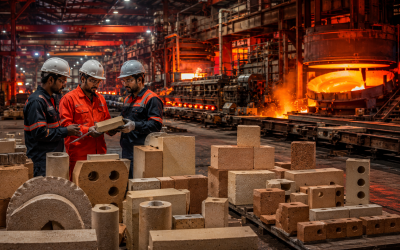
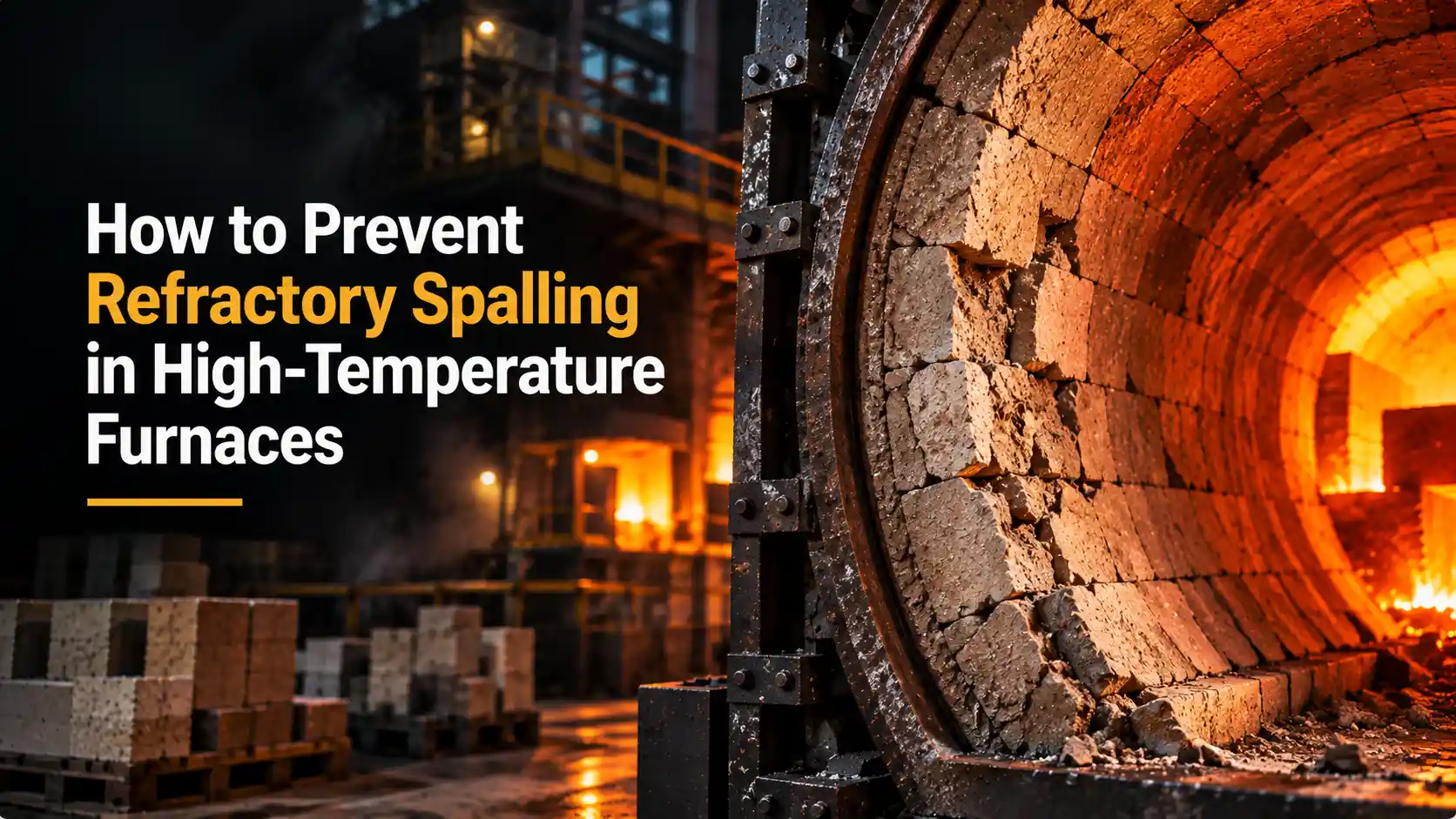
A furnace lining rarely fails all at once. It fails in pieces: a chunk of brick face flaking off during a heat-up, a crack running through a castable panel after a shutdown, a hot spot showing up on the shell where the lining used to be intact. This gradual, piece-by-piece breakdown is called refractory spalling. Among the most common and preventable causes of premature furnace lining failure.
Understanding what causes it, and what actually reduces the risk, can mean the difference between a lining that runs a full campaign and one that needs an unplanned, expensive reline halfway through.
Key Takeaways
- Refractory spalling is the cracking or flaking away of refractory material, most often starting at the hot face of a furnace lining.
- The main cause is thermal shock, a steep temperature gradient between the hot and cold face caused by rapid heating or cooling.
- Thermal cycling, mechanical damage, chemical attack, and poor material selection can cause spalling.
- An unplanned reline caused by refractory failure can cost $1–3 million and take furnaces offline for two to four weeks.
- Controlled heat-up and cool-down schedules are among the most effective and lowest-cost ways to prevent refractory spalling.
- Selecting refractory bricks and castables engineered for thermal shock resistance reduces internal stress during normal operating cycles.
- Regular inspection and proactive maintenance catch early-stage cracking before it develops into a full lining failure.
What Is Refractory Spalling?
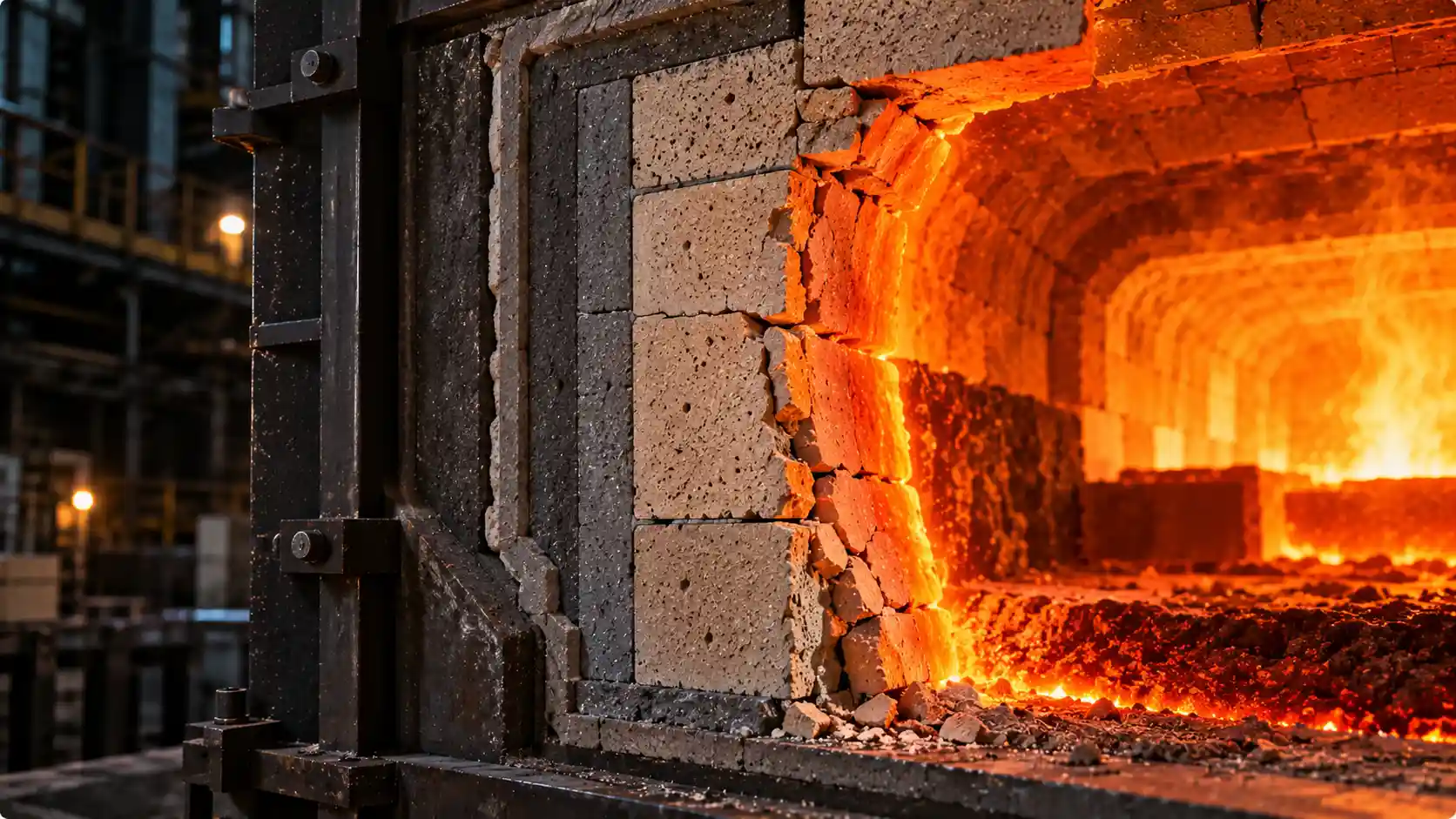
Refractory spalling is the breaking, cracking, or flaking of refractory lining, usually from the hot face. Rather than the material simply eroding evenly over time, spalling causes chunks or layers of refractory to break off, exposing fresh material underneath (and eventually the furnace shell itself) to direct thermal and mechanical attack.
It’s a form of refractory lining failure that tends to compound itself. Once a section spalls, the exposed surface underneath is often less protected and more vulnerable to the same stresses that caused the original crack, so damage tends to accelerate rather than plateau.
What Causes Refractory Spalling in High-Temperature Furnaces?
Spalling is usually caused by one or more of the following against the lining.
Thermal shock: This is the most common trigger. When a refractory lining is heated or cooled too quickly, a steep temperature gradient forms between the hot face and the cold face. The hot face expands (or contracts) faster than the material behind it, generating internal stress that eventually exceeds the material’s strength and causes cracking. This is why thermal spalling in refractories is so closely tied to how a furnace is heated up or shut down, not just the material itself.
Thermal cycling: Repeated heating and cooling over multiple campaigns fatigues the refractory structure, even if a single exposure doesn’t cause visible damage. Microcracks that form during each cycle accumulate, weakening the lining until a spall eventually occurs.
Mechanical stress: Physical impact from loading materials, mechanical vibration, or improper installation can initiate cracks that later propagate under thermal stress. This is often labeled mechanical spalling, and it’s frequently a case of installation or operational handling rather than a flaw in the refractory itself.
Structural or chemical changes: Slag penetration, chemical attack from furnace atmosphere, or reactions with process materials can alter a refractory’s composition over time, changing its coefficient of thermal expansion in localized areas. The altered layer shears away when it expands or contracts differently from the material behind it, a process called structural spalling.
Poor material selection: Refractories with a high coefficient of thermal expansion or low thermal shock resistance are inherently more prone to cracking under rapid temperature swings, regardless of how carefully the furnace is operated.
Why Refractory Spalling Prevention Matters
Ignoring spalling risk can lead to unplanned shutdowns and shorter lining life. According to industry data on cement kiln refractory management, an unplanned reline caused by lining failure can cost between $1 million and $3 million in relining expenses alone, before accounting for two to four weeks of lost production during the shutdown. That’s the kind of cost that makes prevention, not repair, the priority for any plant running a high-temperature furnace.
Beyond direct cost, spalling also creates safety risks. As protective refractory thickness is lost, the furnace shell becomes exposed to higher temperatures, increasing the risk of hot spots, shell deformation, and in severe cases, structural failure of the vessel itself.
How to Prevent Refractory Spalling in Furnaces
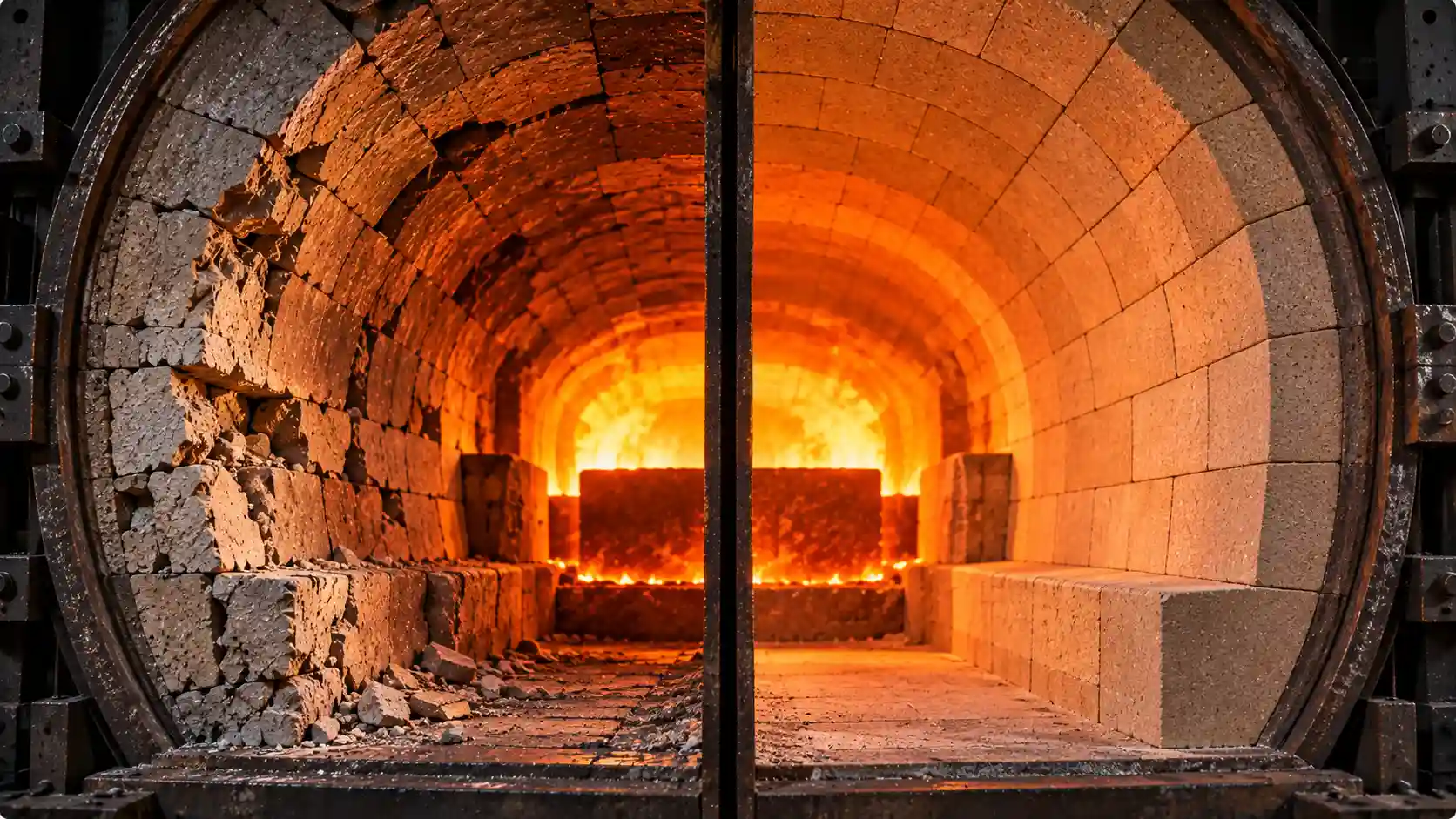
Preventing spalling comes down to controlling the conditions that cause thermal and mechanical stress, and selecting materials matched to those conditions in the first place.
Follow a controlled heat-up schedule: Instead of quickly heating the furnace up to full temperature, a slow, staged heat-up schedule gives the refractory time to expand evenly, reducing the difference in temperature between the hot and cold faces. This is one of the simplest and most effective ways to prevent refractory brick spalling, and it costs nothing beyond patience and a documented procedure. In controlled laboratory thermal shock trials, specimens have been shown to crack at heating rates as low as 5 to 10°C per minute, underscoring just how sensitive some refractories are to rapid temperature change.
Control cooling rates just as carefully: Rapid cooling generates the same kind of thermal gradient as rapid heating, just in reverse. A controlled cooling schedule during planned shutdowns reduces the risk of spalling as much as a controlled heat-up does.
Select materials for thermal shock resistance: Not all refractories perform equally under thermal cycling. Using refractory bricks that are made of materials that don’t expand or contract as much and conduct heat more efficiently lowers the stress that is put on the material during normal heating and cooling cycles.
Design for expansion: Proper expansion joints and correctly specified installation gaps allow a refractory lining to expand under heat without generating excessive internal compression, which helps prevent the shear failure associated with structural spalling.
Avoid mechanical damage during installation and operation: Careful handling during loading and unloading, along with correctly trained installation crews, prevents the small mechanical cracks that often become the starting point for larger thermal spalls later on.
Preventive maintenance: Regular Refractory Lining inspections for early-stage cracking, coating loss, and shell hot spots allow targeted repairs before full section failure.
Choosing the Right Refractory Material to Resist Spalling
Prevention begins with material selection before you light the furnace. High temperature refractory products vary significantly in how they respond to thermal stress, and choosing the wrong one for a given duty cycle is often the root cause behind recurring spalling problems, no matter how carefully the furnace is operated afterwards.
This is why working with a manufacturer that understands both the chemistry and the mechanical behavior of Refractory Materials matters. Starting with the right thermal expansion coefficient, thermal conductivity, and mechanical strength for the furnace’s heating and cooling profile is cheaper than fixing premature refractory failure.
Protecting Your Furnace Lining Starts With the Right Refractory
One mistake rarely causes refractory spalling; rather, operating conditions and material choice push a lining beyond its structural capacity. Controlling heat-up and cool-down rates goes a long way, but it works best when paired with a refractory that was specified correctly for the furnace’s actual thermal profile in the first place.
Ganesha Refractory manufactures refractory bricks and Refractory Castables engineered for thermal shock resistance across steel, cement, glass, and power generation applications, helping plant teams reduce spalling risk from the material stage onward rather than troubleshooting it after a lining has already failed.
Frequently Asked Questions
What is refractory spalling?
Refractory spalling is the fracturing or flaking away of pieces of a refractory lining, typically starting at the hot face, caused by thermal, mechanical, or structural stress.
What causes refractory spalling in high-temperature furnaces?
The main causes include thermal shock from rapid heating or cooling, repeated thermal cycling, mechanical damage during handling or installation, and chemical attack that alters the refractory’s structure over time.
How can refractory spalling be prevented?
Spalling can be reduced through controlled heat-up and cool-down schedules, selecting materials with strong thermal shock resistance, proper expansion joint design, careful installation, and regular inspection.
How does thermal shock cause refractory spalling?
Thermal shock creates a temperature gradient between a refractory’s hot and cold face, generating internal stress as the two zones expand or contract at different rates, eventually leading to cracking.
Can rapid heating cause refractory spalling?
Yes. Heating a furnace too quickly is one of the most common triggers for thermal spalling, since it doesn’t give the refractory lining time to expand evenly throughout its thickness.