Not every brick is the same when it comes to dealing with extreme heat in industrial settings. Among the most important parts of modern furnace design, kiln construction, and high-temperature processing systems are insulation bricks, which are also called insulating fire bricks or thermal insulation bricks. What exactly are insulation bricks, though, and why are they so important to industries from making steel to making ceramics? This guide breaks it all down.
Key Takeaways
- Insulation bricks are not the same as fire bricks. Fire bricks handle direct flame contact; insulation bricks sit behind them to stop heat from escaping. Most furnaces used in factories need both.
- Low thermal conductivity is their superpower. Insulation bricks work because they are porous and full of air pockets. Less heat escapes, so less fuel is wasted.
- Type matters. Mullite, alumina bubble, diatomite, and calcium silicate bricks each suit different temperature ranges and environments. Choosing the wrong type costs money and performance.
- Energy savings are significant. Properly specified insulation brick lining can cut furnace energy consumption by 15–40%.
- They work with almost every industry that needs a lot of heat, from glass and steel to ceramics, petrochemicals, and power plants.
- Lighter weight is a real operational advantage. Insulation bricks weigh 40–70% less than dense fire bricks, easing installation and reducing structural load.
- Specification requires care. Service temperature, thermal conductivity, compressive strength, and chemical compatibility all need to align with your specific application.
What are Insulation Bricks?
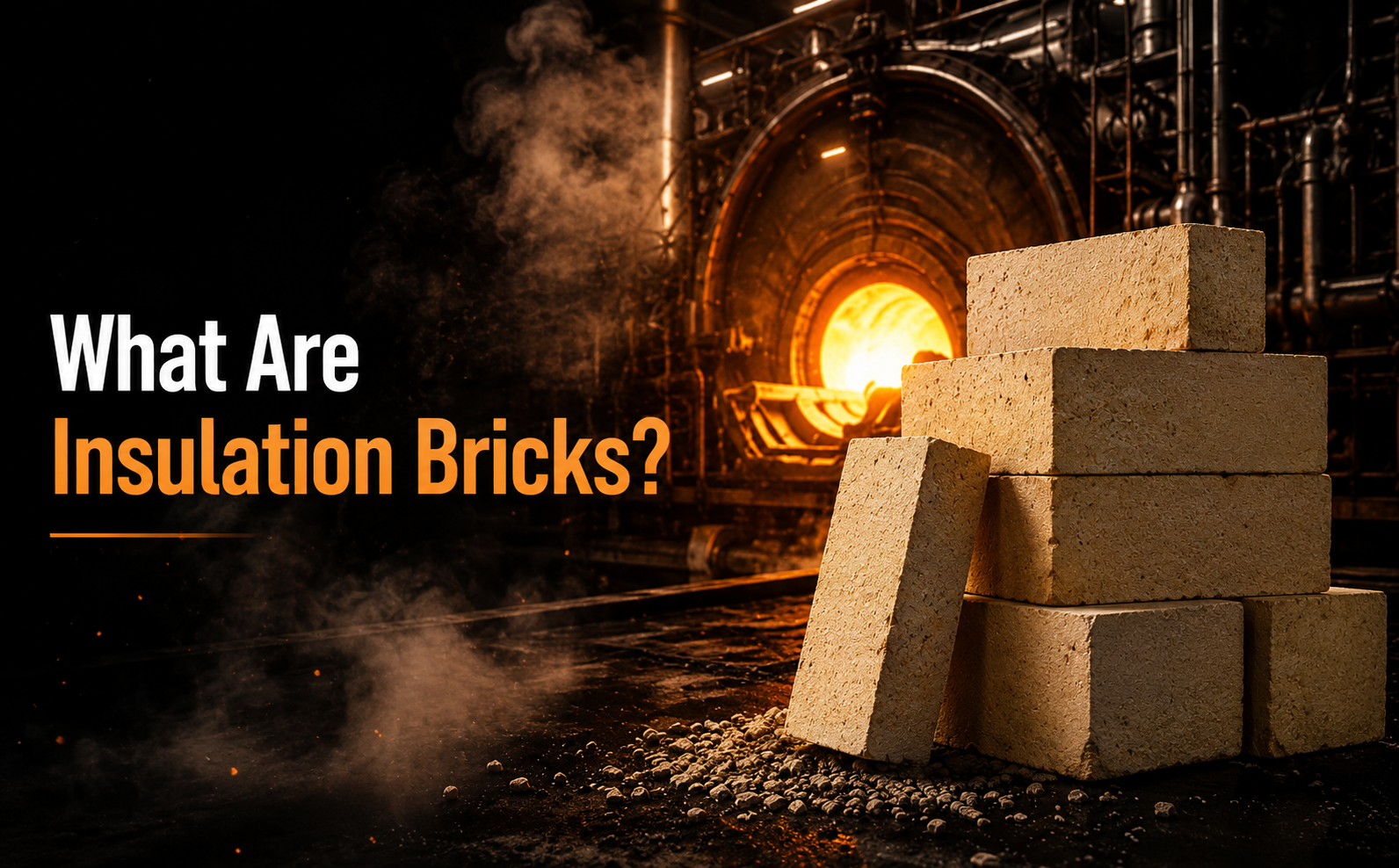
Insulation bricks are made of refractory materials that are light and porous so that heat doesn’t move as easily. They are not like regular building bricks because they are made to withstand high temperatures (often over 1,600°C) and keep heat inside the systems they line.
Low thermal conductivity is what makes them unique. This is made possible by a carefully controlled porous microstructure. Tiny air pockets inside the brick’s body act as natural insulators, making it much less likely for heat to move through. As a result, the material stays hot on the side that faces the inside and much cooler on the side that faces the outside.
Top manufacturers make high-quality insulating fire bricks and other refractory insulation products that are designed to manage heat precisely in a wide range of tough industrial settings.
Types of Insulation Bricks Explained
Different insulation bricks are used for different things. The main groups are listed below:
- Mullite Insulation Bricks: These bricks are very strong at temperatures up to 1,600°C because they are made of mullite, a crystalline silicate mineral. They are often found in high-temperature tunnel kilns, glass furnaces, and ceramic kilns.
- Alumina Bubble Bricks: These high-temperature insulation bricks are very light and work well in applications with temperatures above 1,600°C because they are made of hollow alumina microspheres. They work great in the advanced ceramics and aerospace industries.
- Diatomite Insulation Bricks: Derived from naturally occurring diatomaceous earth, these bricks are effective up to around 900°C and are widely used for back-up lining in lower-temperature applications where cost efficiency matters.
- Calcium Silicate Bricks: Known for low shrinkage and excellent resistance to thermal shock, calcium silicate insulation bricks are frequently used in petrochemical furnaces and power plant boilers.
What is the Difference Between Insulation Bricks and Fire Bricks?
This is one of the most frequently misunderstood distinctions in refractory engineering. The difference between fire bricks and insulation bricks comes down to density, function, and placement:
- Fire bricks (dense refractory bricks) are heavy, durable, and designed to withstand direct contact with flames, molten metal, or slag. They resist abrasion and chemical attack but have poor insulating ability.
- Insulation fire bricks are lightweight and porous, specifically engineered to reduce heat loss. They are placed behind the hot face lining to conserve energy and protect the outer shell.
Dense firebricks are used on the working face of most industrial furnaces, and insulation bricks are used on the back layer. This is because it gives the best balance of durability and energy efficiency.
What are Insulation Bricks Used for?
The insulation bricks uses span a remarkably wide range of industries. Key applications include:
- Insulation bricks for furnace linings in iron, steel, and aluminium smelting
- Kiln insula tionin ceramic, brick, and cement manufacturing
- Boiler and heat exchanger backup lining in power generation
- Petrochemical reactors and reformers requiring stable thermal environments
- Glass melting tanks where precise temperature control is critical
- Heat treatment furnaces in automotive and aerospace manufacturing
Essentially, any high-temperature industrial process that needs to retain heat, reduce energy consumption, or protect structural elements benefits from refractory insulation bricks.
Benefits of Insulation Bricks in Industries
The benefits of insulation bricks go well beyond simply retaining heat.
- Improved Energy Efficiency: How insulation bricks improve energy efficiency is straightforward: by preventing heat from escaping furnace walls, they allow the system to reach and maintain target temperatures with far less fuel. Studies in refractory lining optimization show energy savings of 15–40% when proper insulation layers are incorporated.
- Faster Heat-Up Times: Because insulation bricks have low thermal mass, they don’t absorb much heat themselves. This means that furnaces and kilns can reach operating temperatures more quickly, cutting down on cycle times and increasing throughput.
- Reduced Shell Temperature: By acting as a thermal barrier, thermal insulation bricks keep furnace shells cooler, extending equipment life, reducing thermal stress on structural steelwork, and improving workplace safety.
- Lightweight Construction: Insulating fire bricks for high-temperature applications typically weigh 40–70% less than dense fire bricks, reducing the structural load on furnace frameworks and foundations and simplifying installation.
How to Choose the Best Insulation Bricks for Industrial Furnaces
If you are wondering How To Choose The Best Insulation Bricks here are some of the key parameters to keep in mind:
- Maximum service temperature: Match the brick classification to the peak operating temperature of your process, with an appropriate safety margin.
- Thermal conductivity rating: Lower is better for insulation. Look for values typically between 0.2 and 0.6 W/m·K for high-performance refractory insulation bricks.
- Compressive strength: Adequate mechanical strength is necessary to support the structure without crumbling under load.
- Chemical compatibility: Certain industrial environments (e.g., acidic or alkaline atmospheres) require chemically resistant brick compositions.
- Permanent linear change: Ensures dimensional stability during repeated thermal cycling, preventing cracks or gaps in the refractory lining.
Consulting with a trusted insulation brick manufacturer like Ganesha’s Refractory can help you identify the right product specification for your exact application, whether you’re running a rotary kiln, shuttle kiln, electric furnace, or batch annealing system.
Conclusion
Insulation bricks are quiet workhorses of modern industry. From reducing energy bills in steel plants to enabling precise temperature control in specialty ceramics, refractory insulation bricks form an invisible but indispensable part of high-temperature processing systems worldwide.
Choosing the right type, understanding how they differ from dense fire bricks, and working with experienced Insulation Bricks Manufacturer ensures your operations run efficiently, safely, and sustainably. If you want to properly insulate a new furnace or make an old one work better, you should first know what insulation bricks are and what they can do for you.
Looking for expert guidance? Explore our resources on the difference between fire bricks and insulation bricks.
Frequently Asked Questions
Q1. What are insulation bricks?
Insulation bricks are lightweight, porous refractory materials with low thermal conductivity, used to line furnaces, kilns, and boilers to minimize heat loss and maintain consistent high-temperature operating environments.
Q2. What are insulation bricks used for?
Mostly, they keep heat in industrial furnaces, ceramic kilns, glass furnaces, boilers, reactors, and heat treatment equipment. This is done to cut down on heat loss and make the equipment more energy efficient.
Q3. What is the difference between insulation bricks and fire bricks?
Fire bricks are dense and designed for direct flame exposure and abrasion resistance. Insulation bricks are lightweight and porous, placed behind the hot face to prevent heat loss. Most furnace linings use both in combination.
Q4. What are the benefits of insulation bricks?
Key benefits include energy savings of up to 40%, faster heat-up times, lower outer shell temperatures, reduced structural load, and extended equipment service life.
Q5. Which industries use insulation bricks?
Anyone who works with high temperatures can benefit from using them, whether they’re smelting steel and iron; making ceramics and glass, cement, electricity, petrochemicals, or aerospace; or heat treating cars.