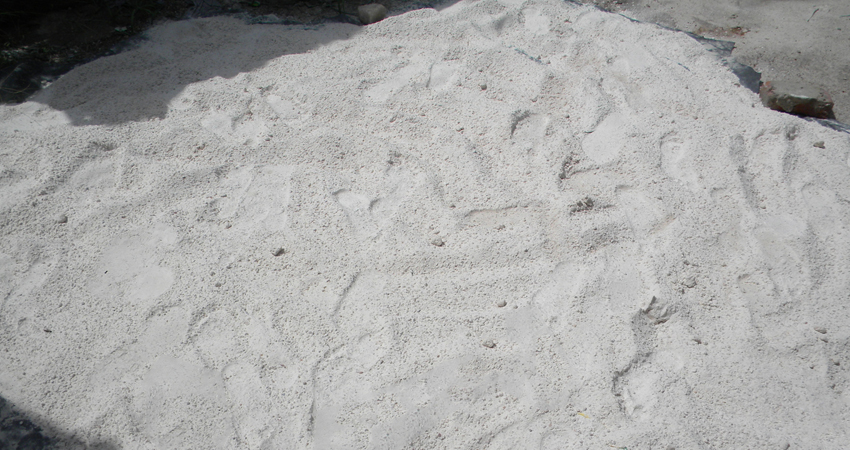
Silica Ramming Mass, also known as Acidic Ramming Mass, plays a crucial role in induction furnaces during the melting of steel. This substance is used to line induction furnaces. Silica ramming mass has very important quality of withstanding and easily absorbing thermal shocks.
Here we will discuss how to use silica ramming mass in induction furnaces & further details of SRM refractory lining material, without further ado, let’s get started.
What is Silica Ramming Mass?
Silica ramming mass (SRM) is a type of refractory material that is commonly used in induction furnace lining materials. silica ramming mass is composed of silicon carbide (SiC), silica (SiO2), aluminum oxide (Al2O3), and iron oxide (Fe2O3). These components make up the majority of the composition of silica ramming mass. Silica ramming mass is generally produced using a chemical reaction between carbonaceous material and molten metal.
In general, the melting point of the mixture is higher than the melting point of the individual elements. Therefore, the temperature at which the mixture melts is lower than the temperatures at which the individual elements melt. After the mixture cools down, the solidified product is crushed and ground into fine particles. The resulting particles have a size ranging from 0.25 mm to 1.0 mm.
Complete Process of Using Silica Ramming Mass:
The purpose of using silica ramming mass in induction furnace lining materials is to increase the thermal conductivity of the lining materials. Thermal conductivity refers to the rate at which heat travels through a material. A high thermal conductivity helps to reduce the amount of time necessary to reach the desired temperature inside the furnace. When the temperature reaches the desired level, the furnace can be shut off. In order to use silica ramming mass in induction furnace linings, the following steps should be taken:
1. Mixing the ingredients together
Mixing the ingredients together is the first step in producing silica ramming mass. The mixing process involves adding the appropriate amounts of each ingredient to a crucible. The crucible is then heated until the mixture starts to boil. Once the mixture begins to boil, the crucible is removed from the heating device and allowed to cool. The cooled mixture is then placed back into the heating device and heated again. The cycle of heating and cooling is repeated several times until the mixture becomes homogeneous.
2. Grinding the mixture
After the mixture has been mixed, it is transferred to a grinding machine. The grinding machine consists of two rollers that rotate around a horizontal axis. One roller rotates clockwise while the other roller rotates counterclockwise. As the rollers rotate, they grind the mixture into small pieces. The smaller the pieces, the finer the finished product. The final product is then sieved to remove any remaining impurities.
3. Sintering the mixture
Once the mixture has been ground and sieved, it is ready to be sintered. Sintering is the process of converting the mixture into a hard ceramic material. To do this, the mixture is placed into a furnace where it is heated to a specific temperature. The temperature is maintained for a certain period of time. At the end of the specified period of time, the furnace is turned off and the mixture is left to cool.
4. Testing the product
When the mixture has cooled down, it is tested to ensure that it meets the requirements set by the manufacturer. If the mixture does not meet the specifications, it is re-ground and re-tested.
5. Drying the mixture
Drying is the last stage of production. The mixture is dried in a drying oven. The oven is equipped with fans that circulate air throughout the chamber. The fans blow hot air across the surface of the mixture. The hot air evaporates moisture from the mixture. The mixture is continuously monitored to ensure that it remains dry.
Benefits of Using Silica Ramming Mass in Induction Furnace Refractory Lining:
Here’s the following list of the benefits of silica ramming mass, which makes it the most commonly used refractory lining material for induction furnaces.
- Meticulous and organized lining ability
- Consistent performance
- Long shelf life
- Optimal bulk density
- Wear resistant
- Free from sintering agent
Conclusion:
Finding the standard quality refractory materials is what you need to get your task done in an effective way. With the help of Ganeshas- the leading manufacturer of refractory material in India, you can easily find the best refractory lining material at a competitive price. Get in touch with us for more details, Ganeshas team is glad to offer you the finest service as possible.