In the era of industrialization, we constantly look for advancements and development. The manufacturing process has also gone through constant developments. Especially cement industry has witnessed fast changes in terms of material handling and product mixtures. A special type of cement is used in the manufacturing procedure which is known as refractory cement. With excellent features and heat-resistant properties “calcium aluminate” is a popular choice among manufacturers in the industrial field.
Refractory Cement
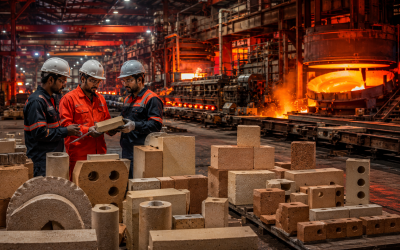
The manufacturing industry works on kilns and furnaces. As large-scale production takes place in these industries, they need durable and thermodynamically stable cement material in kilns and furnaces. Refractory cement or high-temperature masonry are the products for this purpose. A unique variety of cement known as refractory cement is capable of withstanding temperatures as high as 3000°F.
The goal of creating this kind of heat-resistant cement is to create the boiler and furnace linings, which get additional heat regularly for the majority of manufacturing operations. The production facilities may be harmed by the normal concrete’s inability to withstand such high temperatures. As a result, furnaces and boilers employ heat-resistant or refractory cement.
What Is Calcium Aluminate Cement?
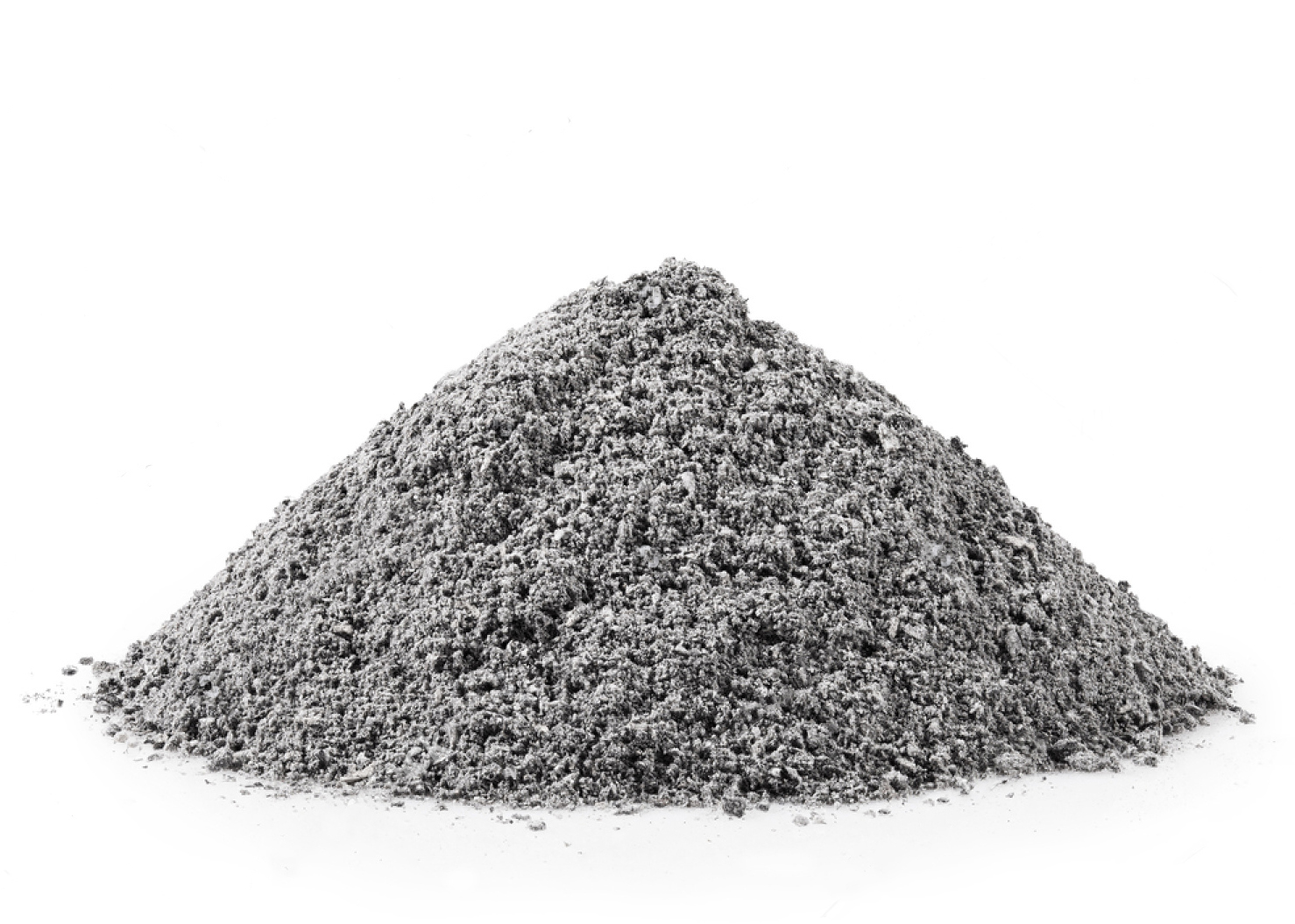
It is a hydraulic cementitious material. The most frequent method of producing it is grinding aluminate cement clinkers. The process of manufacturing portland cement and calcium aluminate cement is almost similar. Steps like raw material crushing, pre-homogenization and calcination are followed to make this cement.
Among other refractory products, calcium aluminate cement is widely used in the industry due to its high heat resistance properties. As a hydraulic binder, CAC also known as Calcium Aluminate Cement works in high alumina refractory castable systems. High-alumina cement is used in sewer infrastructure and marine construction.
Refractory Concrete Properties

Refractory concrete has special features compared to the cement concrete properties used in the construction industry. It has to be heat resistant because it will be helpful in industrial procedures. Check out other different properties below :
- Refractory cement and concrete’s primary quality is its unbreakable ability to withstand extremely high temperatures.
- It possesses the greatest compressive strength.
- significantly less shrinkage than a typical cement
- There is also high tensile strength.
- Gravity varies from 0 to 3.
- Refractory cement concrete has a smaller amount of hydration heat.
- It possesses the strongest thermodynamic stability.
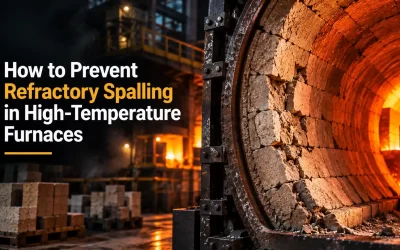
- It keeps its mechanical integrity in the face of thermal spalling, corrosive smoke, and direct flame impingement.
Castable refractory cement has a special feature that it can be poured into different molds and you can have them in different shapes and sizes. Furnaces and kilns have them as liners. With the use of castable cement, you can retain heat up to 2500°F and insulate it for the process. Refractory castables, in addition to alumina and ceramics, are lightweight.
Advantages Of Refractory Concrete
Boost the refractory castables’ strength
Traditional refractory materials have a number of holes that calcium aluminate cement fills. This increases bulk density lowers porosity, and, increases strength.
Optimize casting efficiency
With the proper quantity of dispersant, a refractory micro-silica powder may form colloidal particles in water and has significant activity, which can improve casting performance.
Extend The Durability Of Manufacturing Klins And Furnaces, Thus Reduce The Extra Cost
In addition to improving high-temperature performance, high-alumina cement used in the manufacturing of refractory cement may increase the cohesiveness of refractory materials. As a result, procedures become more effective and refractory castables’ useful lives may be prolonged.
Disadvantages Of Refractory Concrete
Refractory cement is extremely strong, but when it falls, it can cause environmental damage. It has the potential to affect not just the ecosystem but also people. There is a strong possibility that the furnaces’ interior components, such as asbestos, may eventually leak out. After emerging, they begin to mingle with airborne particles.
These harmful substances are capable of entering the human body. Massive tissue scarring problems and other health problems might emerge as a result. Asbestosis, a respiratory condition, results from this. The situation might get worse because mesothelioma, a malignancy, could emerge.
Conclusion
Refractory cement increases the thermodynamic properties of refractory materials. It must be used in the proper composition and supervision. To avoid any mechanical failure, use high-alumina cement for your manufacturing units. As there are many applications of refractory products, choose the materials that perform according to your requirements and are also compatible with your processes.
Are you looking for top-notch maintenance services and refractory materials for all of your manufacturing facilities and buildings? Ganesha Manufacturers produce a variety of construction materials.