Refractory lining failure is one of the most costly and disruptive problems in industrial furnace operations. An unexpected breakdown can halt production, damage furnace structures and create serious safety risks. Understanding what causes these failures helps operators make better material choices, maintain furnaces more effectively and extend the working life of their refractory systems.
Key Takeaways
- Refractory lining failure is most commonly caused by thermal shock, chemical corrosion, mechanical abrasion, improper installation and furnace overheating.
- Thermal shock from sudden temperature changes generates internal stress that causes cracking and spalling in refractory linings.
- Chemical corrosion by molten metals, slags and gases progressively degrades the lining from the contact surface inward.
- Incorrect installation and insufficient curing reduce refractory lining service life even when quality materials are used.
- Visible cracking, shell hotspots and rising energy consumption are early indicators that the lining requires inspection.
- Correct material selection, controlled heat-up schedules and scheduled maintenance are the most effective defenses against refractory failure.
What Is Refractory Lining Failure and Why Does It Matter?
Refractory linings protect furnace shells from extreme temperatures, chemical attack and mechanical stress during high-temperature operations. When the lining degrades, heat transfer accelerates, reducing energy efficiency and increasing shutdown risk. Selecting the correct industrial refractory materials for each application and operating temperature is the foundation of a durable and reliable furnace lining system.
Common Causes of Refractory Lining Failure in Industrial Furnaces
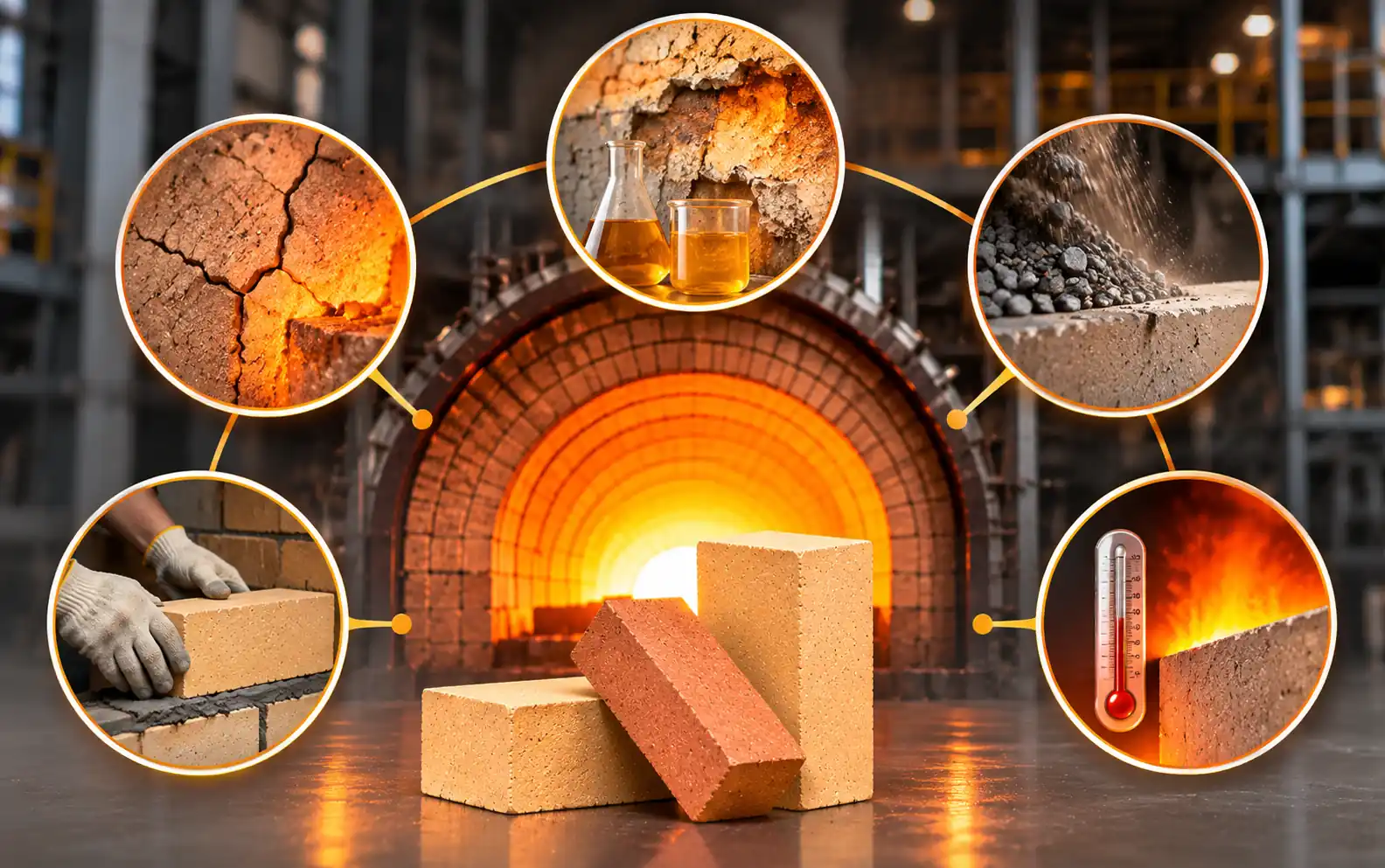
Five main failure mechanisms account for most refractory lining problems in industrial furnace operations.
1. Thermal Shock and Rapid Temperature Changes
Thermal shock occurs when refractory materials face sudden temperature changes during furnace start-up, shutdown or operational fluctuations. The rapid expansion and contraction generates internal stress that causes cracking, spalling and progressive structural weakening. Choosing refractory lining materials with high thermal stability and low expansion characteristics significantly reduces shock-related damage in high-temperature applications.
2. Chemical Corrosion and Attack
Chemical corrosion is a progressive failure caused by reaction between lining materials and molten metals, slags or industrial gases at high temperatures. This attack weakens the lining’s structural integrity, accelerating erosion and thinning. Industrial refractory castables formulated for chemical resistance perform significantly better in environments where aggressive chemical attack is a persistent challenge.
3. Mechanical Abrasion and Erosion
Mechanical wear develops when charging materials, molten metal movement or high-velocity gases continuously abrade the refractory surface during furnace operation. Over time this erosion thins the lining and exposes the furnace shell to heat. Applying quality refractory fireproof mortar at joints and interface areas helps maintain lining integrity and prevents accelerated wear in high-contact zones.
4. Improper Installation and Insufficient Curing
Incorrect installation practices significantly reduce refractory lining service life even when premium materials are used. Poor joint sealing, inadequate drying and rushed curing leave the lining vulnerable to cracking during the first operational cycle. Products such as phosphate bonded refractory castable must be installed and cured strictly to manufacturer specifications to achieve the designed performance in service.
5. Furnace Overheating and Excessive Operating Temperatures
Operating a furnace beyond the refractory’s rated temperature capacity causes rapid material degradation, sintering and eventual structural failure. Localised hotspots that concentrate heat unevenly accelerate breakdown in specific zones. High alumina refractory bricks provide greater resistance to overheating, extending lining service life in areas exposed to peak operating temperatures.
How to Identify Refractory Lining Damage in Industrial Furnaces
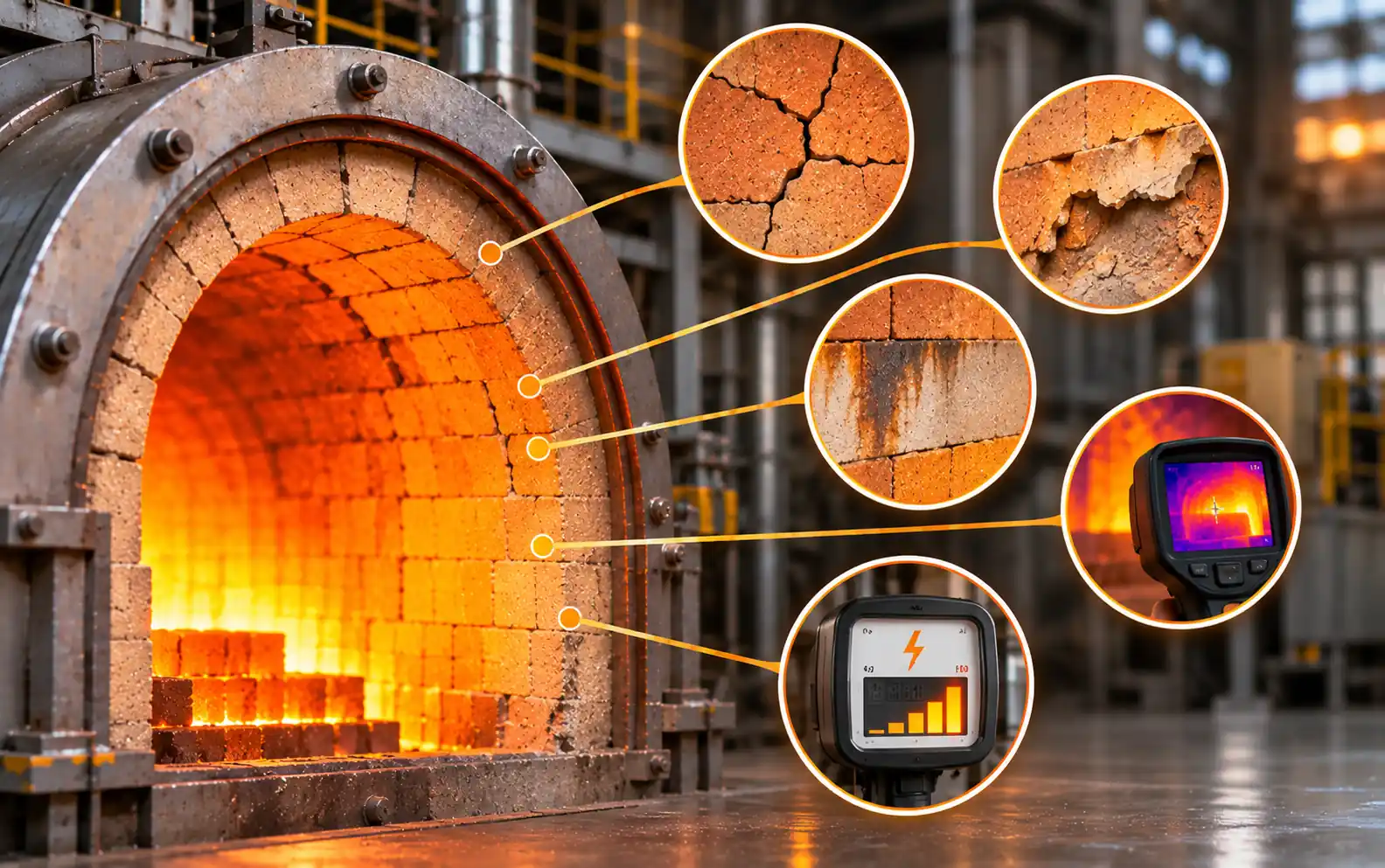
Early identification of refractory lining failure allows teams to plan repairs before a minor problem becomes a major breakdown. Visible cracking, spalling and discolouration indicate internal stress and chemical attack. Hotspots on the furnace shell, uneven heat distribution and unexpected increases in energy consumption are reliable signs that the lining requires inspection or replacement.
How to Prevent Refractory Lining Failure in Your Furnace
Preventing refractory lining failure begins with selecting the correct material grade for the furnace type, temperature and chemical environment. Controlled heat-up and cool-down schedules reduce thermal shock risk. Scheduled inspection, timely repair of surface cracks and consistent maintenance extend service life. Training maintenance personnel on correct installation reduces unplanned failures.
Ganesha’s Refractory: Industrial Refractory Solutions for Furnace Applications
Ganesha’s Refractory is a specialist supplier of refractory products for industrial furnace applications, offering bricks, castables, monolithics and mortars engineered for high-temperature environments across steel, cement, ceramic and chemical processing industries.
Consult Ganesha’s Refractory technical team to identify the right refractory solution for your furnace type and operating conditions.
Frequently Asked Questions
What are the common causes of refractory lining failure?
Refractory lining failure is most commonly caused by thermal shock, chemical corrosion, mechanical abrasion, improper installation and operating temperatures that exceed the lining material’s rated capacity.
How does thermal shock damage refractory linings?
Thermal shock occurs when rapid temperature changes cause uneven expansion and contraction in the refractory, generating internal stresses that crack and weaken the material over repeated heating and cooling cycles.
How can refractory lining failure be prevented?
Prevention requires correct material selection, strict adherence to installation and curing procedures, controlled heat-up schedules and a programme of regular furnace lining inspection and maintenance.
What are the signs of refractory lining damage in industrial furnaces?
Key signs include visible surface cracking, spalling, hotspots on the furnace shell, uneven internal heat distribution and an unexplained increase in energy consumption during normal furnace operation.
When should refractory lining be replaced?
Refractory lining should be replaced when inspection reveals significant structural damage, recurring hotspots, unacceptable heat loss or when ongoing repair costs approach the cost of a full lining replacement.