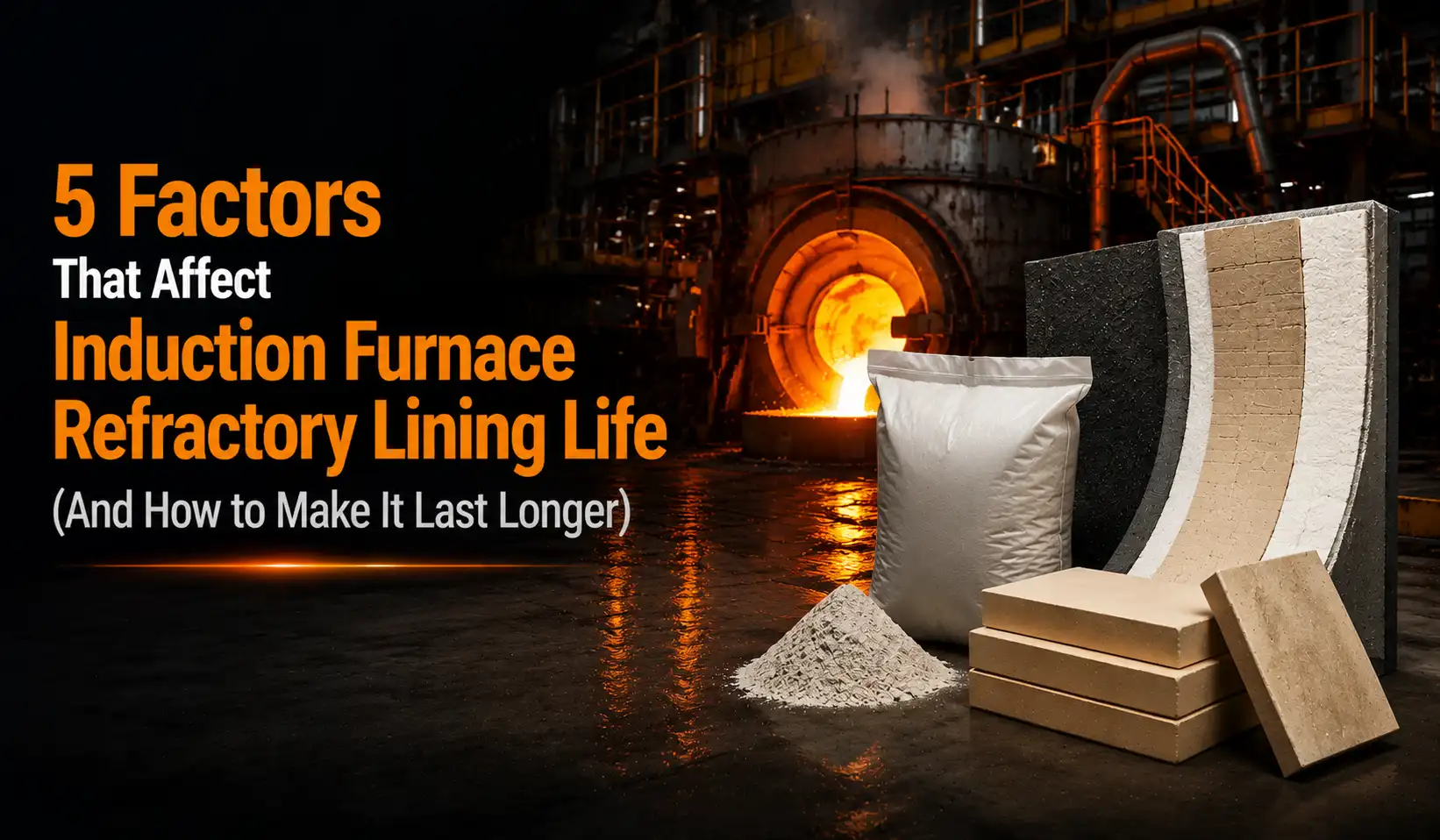
If you own a foundry, you already know that an induction furnace refractory lining is one of those parts that no one notices until it breaks. And when it does, it costs you a lot in repairs, downtime, and heats that can’t be used again. Understanding what drives lining performance is the difference between squeezing out a few hundred extra heats and replacing your lining far sooner than you should.
Lining life isn’t fixed. Depending on the furnace refractory materials used and how the furnace is operated, service life can swing dramatically. Furnaces lined with standard quartz-based ramming mass typically last somewhere between 60 and 200 heats, while advanced fused-silica ramming materials can push service life to 250–450 heats under the right conditions. At the higher end, well-engineered linings on coreless induction furnaces have recorded campaigns of 675 heats with only minor patch repairs.
That’s a huge range, and it comes down to the five factors we’ll walk through below.
Key Takeaways
- The life of a refractory liner can be very different, ranging from about 60 heats for basic quartz linings to 300 heats or more for well-managed, high-quality fused-silica or engineered linings.
- Choosing the right material is very important. For example, silica, alumina, and magnesia refractories work best with different metals. Mismatches speed up wear.
- Operating temperature and thermal cycling are major drivers of lining wear and premature failure.
- Correct installation (ramming density, sintering, lining thickness) sets the ceiling on how long a lining can perform.
- Consistent maintenance and monitoring catch small issues before they become breakouts, extending lining life at low cost.
- Metal-to-lining chemical compatibility is often overlooked but directly affects both lining life and melt quality.
What Determines Refractory Lining Life?
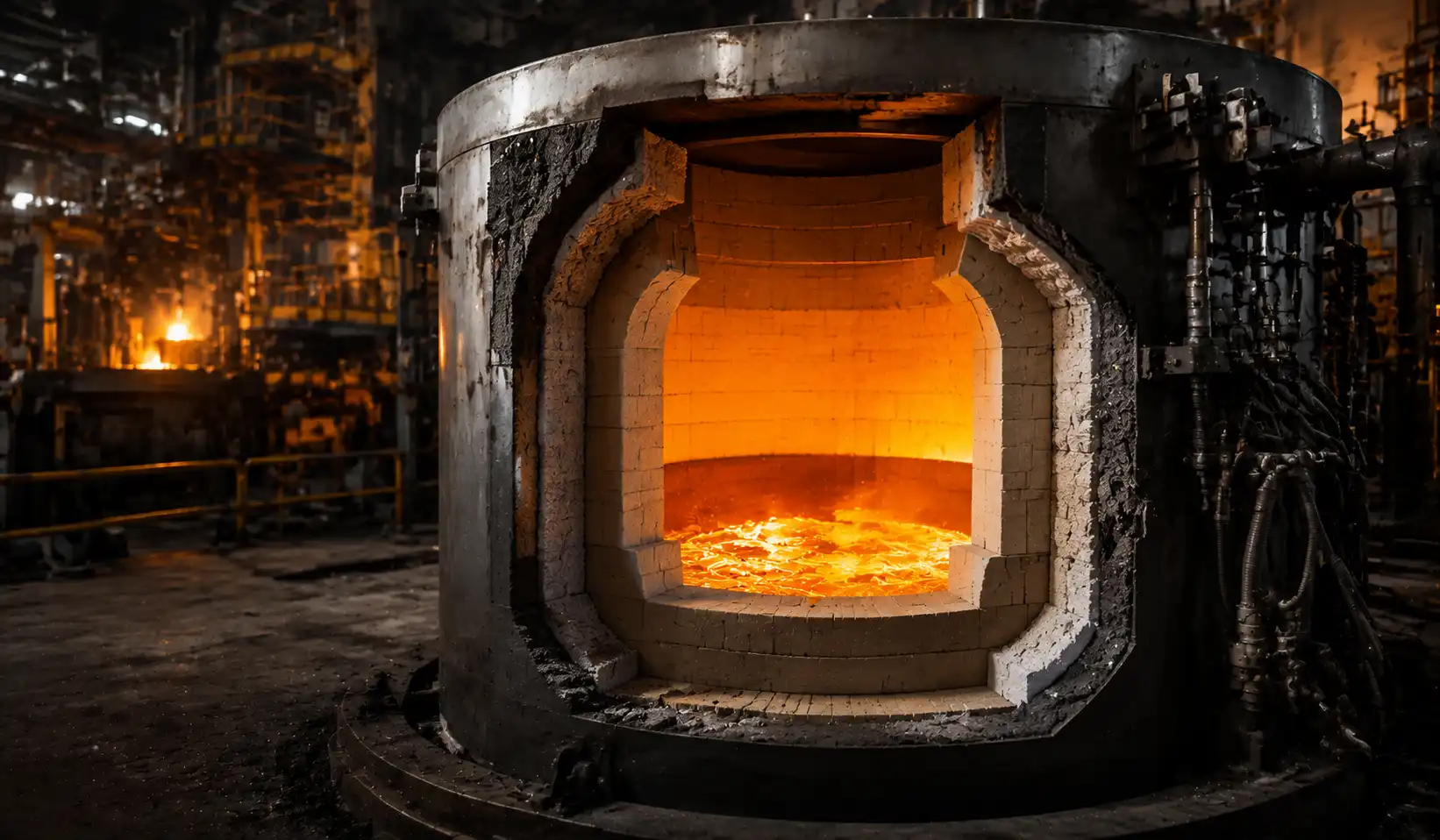 Before getting into the specific factors, it helps to understand the lining itself. A furnace lining is typically built in two parts: the working lining, which is in direct contact with molten metal and takes the brunt of chemical and thermal attack, and the backup lining, which insulates the coil and furnace shell. If you want a deeper primer on how these layers are built and why they matter, our guide on What Is a Refractory Lining breaks it down in detail.
With that foundation, let’s look at the five biggest factors affecting induction furnace lining life.
1. Refractory Material Selection and Quality
The single biggest lever you control is which induction furnace refractory material you choose in the first place. Silica ramming mass, alumina refractory, and magnesia refractory each behave differently depending on what metal you’re melting and at what temperature.
- Silica ramming mass is the standard choice for melting cast iron and is prized for good thermal shock resistance at acidic slag conditions.
- Alumina refractory and high-alumina bauxite materials offer better chemical stability and are often used where slightly more chemical resistance is needed.
- Magnesia refractory is the go-to for basic (high-manganese, high-chromium, or stainless) melts, since an acidic lining would be chemically attacked almost immediately.
Using the wrong refractory aggregate or refractory powder grade for your metal chemistry is one of the fastest ways to shorten lining life. It’s also important that the raw material is pure. Low-grade silica or alumina that has too many impurities lowers the sintering temperature and speeds up wear from the first heat.
2. Furnace Operating Temperature and Thermal Cycling
Furnace operating temperature has a direct and outsized effect on refractory lining wear. The lining expands and contracts every time it is heated and cooled. This repeated thermal cycling is one of the main reasons why induction boiler refractory linings fail.
A few operating habits that shorten lining life:
- Superheating the bath well above the required tapping temperature, which softens the working lining and accelerates erosion.
- Frequent shutdowns and cold starts instead of maintaining continuous, steady operation.
- Rapid cooling after tapping, which introduces thermal shock and promotes cracking.
Best practice is to hold the furnace at a stable, controlled temperature range and avoid unnecessary idle-and-restart cycles wherever production scheduling allows it. This single change often does more for refractory lining performance than any material upgrade.
3. Installation Practices and Lining Thickness
Even the best refractory materials for furnace linings will underperform if installation is rushed or done incorrectly.
It is very important that the material’s density is correct. If the material isn’t rammed down properly, it leaves holes and low-density areas that molten metal can flow through.
Key installation variables include:
- Using the ramming method: Uneven compaction makes the wall’s density vary.
- Sintering process: The initial bake-out and sintering heat must be controlled carefully to build a stable, glassy working layer without cracking it.
- Lining thickness: Too thin, and the lining wears through prematurely; too thick, and you lose furnace capacity and waste energy on excess mass to heat.
Getting the lining thickness right for your furnace size and metal type, combined with a properly controlled sintering schedule, sets the baseline for everything that follows during operation. This idea is used in all kinds of furnaces. Even large pieces of equipment, like the Refractory Solutions Keep Electric Arc Furnaces, depend on proper installation and lining thickness to last as long as they are supposed to.
4. Maintenance and Monitoring Practices
Taking care of refractory lining is often where most lives are lost or saved. Linings degrade gradually, and small issues caught early (a thin spot, a hot spot on the shell, a hairline crack) are cheap to manage. Left unchecked, they turn into breakouts.
Practical induction furnace lining maintenance steps that extend service life:
- Regularly measuring residual lining thickness, especially at the slag line and taphole, where wear is fastest.
- Monitoring the temperature of the water cooling the coil is important because insufficient cooling accelerates damage to the refractory lining from the outside in.
- Scheduling routine furnace emptying and visual inspection rather than running continuously until a problem appears.
- Patching minor wear promptly instead of waiting for a full relining.
A disciplined maintenance program is usually the cheapest way to add dozens of extra heats to a lining’s life and reduces the risk of a sudden, costly induction furnace lining failure mid-heat.
5. Metal Type and Chemical Compatibility
Different metals interact differently with refractory linings, and this chemistry-driven wear is a factor many operators underestimate. When you melt high-manganese steel in an acidic silica lining, for example, the manganese oxide will react aggressively with the silica, causing the lining to fail much faster than expected.
Match the lining chemistry to the metal:
- Acidic linings (silica) for grey iron and ductile iron.
- Basic linings (magnesia) for high-alloy, high-manganese, or stainless steel melts.
- Neutral or high-alumina linings where a middle ground is needed, or where slag chemistry varies across production runs.
Not only does the wrong match shorten the life of the lining, it can also make the melt dirty. Because of this, preventing refractory lining failure should be seen as both a cost and a quality issue.
How to Increase Induction Furnace Refractory Lining Life
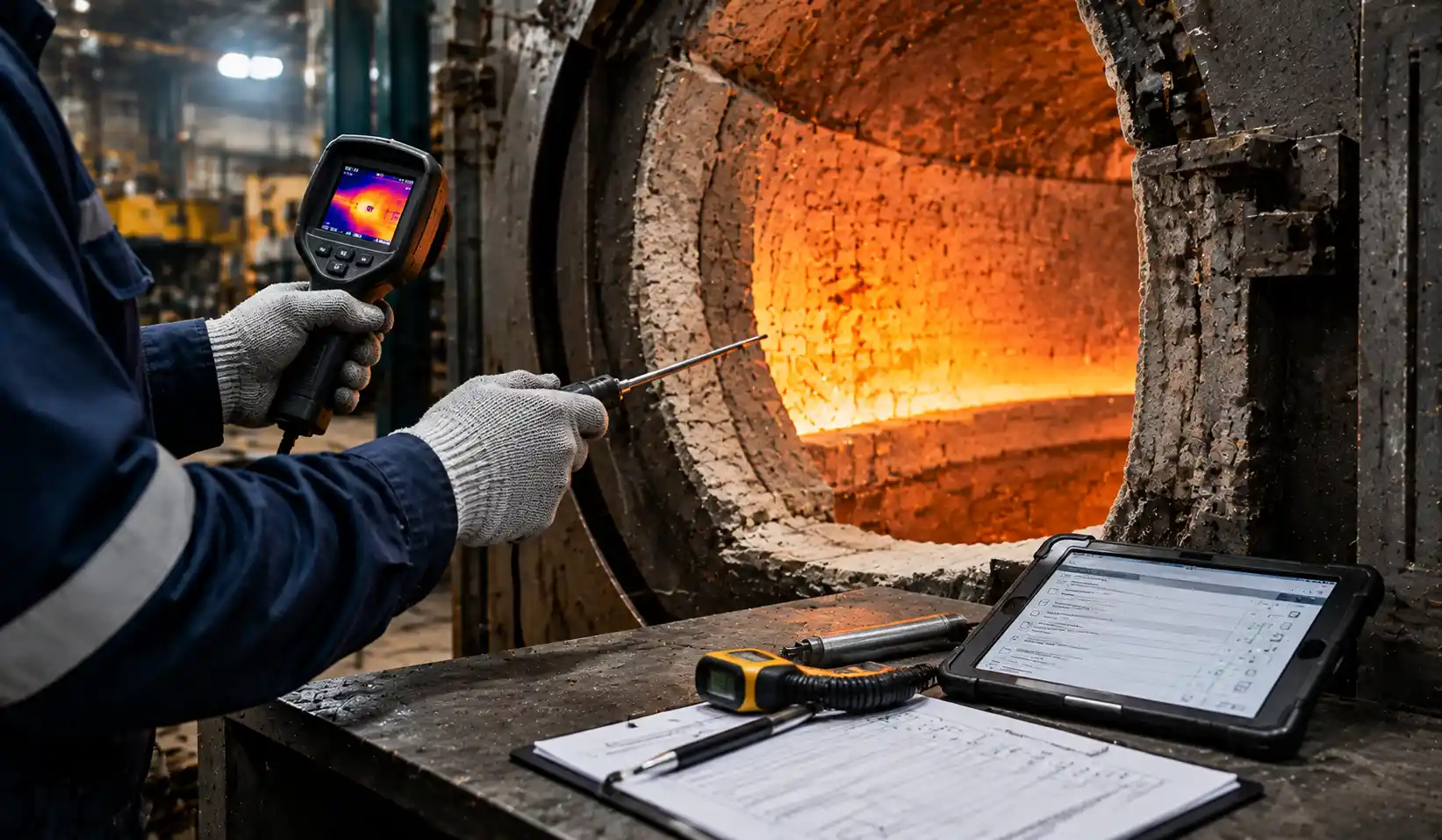
Pulling the five factors together, here’s a quick-reference summary on how to increase induction furnace refractory lining life in practice:
- Match the material (silica, alumina, or magnesia refractory) to your metal chemistry.
- Keep operating temperature stable and avoid unnecessary superheating.
- Follow correct ramming, compaction, and sintering procedures during installation.
- Build a routine inspection and maintenance schedule rather than reacting to failures.
- Avoid mixing incompatible metal types through the same lining without re-evaluating chemistry.
Good lining hygiene isn’t just for induction melting; it’s also important to be careful with the materials you use and the condition of your lining in high-temperature and corrosive environments. For example, Acid Proof Brick Lining Improves Safety in High-Risk industrial environments because chemical exposure, not just heat, causes wear.
Choosing the right lining material and getting expert guidance on installation can add hundreds of heats to your furnace’s working life. Ganesha’s Refractory manufacturer supplies silica ramming mass, alumina, magnesia refractories, and castables engineered for induction melting applications across the steel, iron, and foundry industries. Get in touch to find the right refractory solution for your furnace.
FAQs
1. What factors affect induction furnace refractory lining life?
The main factors are refractory material selection, furnace operating temperature and thermal cycling, installation quality and lining thickness, ongoing maintenance practices, and chemical compatibility between the lining and the metal being melted.
2. How long does induction furnace refractory lining last?
It depends heavily on material and operating practice. Standard quartz-based linings typically last 60–200 heats, while advanced fused-silica or well-maintained linings can reach 250–450 heats and, in some documented cases, even 600+ heats.
3. How can I increase the life of an induction furnace refractory lining?
Use a refractory material matched to your metal chemistry; avoid excessive superheating or unnecessary thermal cycling; follow proper ramming and sintering procedures during installation; and maintain a routine inspection and repair schedule.
4. What causes induction furnace refractory lining failure?
Common causes include chemical attack from mismatched metal-lining chemistry, thermal shock from rapid heating or cooling, poor compaction during installation leaving weak spots, and inadequate coil cooling or maintenance.
5. Which refractory material is best for an induction furnace?
There isn’t just one “best” material. For example, silica ramming mass works best in acidic conditions for melting grey and ductile iron, while magnesia refractory works better for basic, high-alloy, or stainless steel melts. The right choice depends on your specific metal chemistry and operating temperature.